Site Logo Delaware Health and Social Services

    Delaware Animal Services Seeks Tips For Cockfighting Incident In Felton

    FELTON, DE (JUNE 2, 2023)– The Delaware Division of Public Health Office of Animal Welfare’s Delaware Animal Services (DAS) is seeking the public’s help in providing any information regarding an illegal cockfighting ring in Felton.

    On Saturday, May 5, 2023, DAS responded to a report of cockfighting in progress in the 3000 Block of Sandtown Road, Felton. Upon arrival, an animal welfare officer found the fight in progress, with approximately 50 people on scene including children. The people fled the scene and only a few could be positively identified, including the property owners.

    Animal fighting is a cruel blood sport in which roosters bred for aggression are placed in a pit to fight for entertainment and gambling, often until one or both birds die. Animal fighting is often linked to other crimes such as weapons, drugs and human violence. It is illegal in all 50 states, and a felony crime in Delaware.

    This investigation is ongoing. Anyone with any information is urged to contact Delaware Animal Services at 302-255-4646 or online at animalservices.delaware.gov.”¯Tips may be made anonymously.”¯

    Anyone who is deaf, hard of hearing, Deaf-Blind or speech disabled can contact DPH by dialing 711 first using specialized devices (i.e. TTY, TeleBraille, voice devices). The 711 service is free and to learn more about how it works, please visit delawarerelay.com.

    DPH, a division of DHSS, urges Delawareans to make healthier choices with the 5-2-1 Almost None campaign: eat 5 or more fruits and vegetables each day, have no more than 2 hours of recreational screen time each day (includes TV, computer, gaming), get 1 or more hours of physical activity each day, and drink almost no sugary beverages.

    Delaware Health and Social Services is committed to improving the quality of the lives of Delaware’s citizens by promoting health and well-being, fostering self-sufficiency, and protecting vulnerable populations.


    21st Annual Diabetes Wellness Expo Set For June 20 In Dover

    DOVER, DE (JUNE 1, 2023) – The public is invited to the 21st Annual Diabetes Wellness Expo on June 20, 2023 at Delaware Technical Community College’s Terry Campus in Dover, Delaware. The free event will be held from 9:00 a.m. to 3:00 p.m. in the Del-One Conference Center, located at 100 Campus Drive. Lieutenant Governor Bethany Hall-Long will speak at noon.

    The Expo is hosted by the Delaware Diabetes Coalition (DDC) and sponsored by the Division of Public Health’s (DPH) Diabetes and Heart Disease Prevention and Control Program (DHDPC) and the Physical Activity, Nutrition and Obesity Prevention Program. Bronze sponsors are AmeriHealth Caritas Delaware, Anodyne Pain & Wellness Solutions, Beebe Healthcare, Delaware First Health and Tidal Health.

    More than 95,000 Delaware adults reported in 2021 that they had been diagnosed with diabetes, according to the Delaware Behavioral Risk Factor Survey. The survey also shows that 84,800 additional Delaware adults reported being diagnosed with pre-diabetes. Progression to type 2 diabetes can be prevented or delayed by losing weight, engaging in at least 150 minutes of physical activity weekly and improving one’s diet.

    People with diabetes, pre-diabetes, caregivers, employers and health professionals are encouraged to attend the Diabetes Wellness Expo to learn how to prevent complications of the chronic disease, such as kidney failure, adult blindness, lower limb amputations, heart disease and stroke.

    More than 30 exhibitors and educational seminars will provide information about diabetes management, nutrition, exercise, medication adherence, hearing and mental health. Diabetes and blood pressure screenings, hearing screenings, stress assessment and COVID-19 testing and vaccinations are offered at no cost. Health screenings are provided by DPH’s Kent County Mobile Unit, Beebe Healthcare Delaware State University, Mast Audiology Services and PACE Your LIFE.

    A complimentary lunch is included for registered attendees. To register or become a vendor for the Diabetes Wellness Expo, visit https://www.dediabetescoaliton.org/wellness-expo/. Vendors must register by June 9. Attendees can register up to the day of the event. For more information, contact DDC at director@dediabetescoalition.org or 302-519-6767.

    To learn more about diabetes management and prevention programs and resources, visit https://www.healthydelaware.org/Individuals/Diabetes#effects or call DHDPC at 302-744-1020.

    Delaware Health and Social Services is committed to improving the quality of the lives of Delaware’s citizens by promoting health and well-being, fostering self-sufficiency, and protecting vulnerable populations.

    Rabies Exposure Risk Increases As Community Cats And Wildlife Species Known To Transmit The Virus Become More Active Outdoors

    DOVER, Del. (May 22, 2023)– During spring and summer, rabies, which is occasionally found in community cats and wildlife, is more likely to be transmitted to humans and pets due to our increase in outdoor activities. To avoid exposure to rabies, the Delaware Division of Public Health (DPH) advises residents to take the proper precautions.

    Rabies is endemic in Delaware, meaning it occurs regularly within the state’s wildlife populations. Since 2018, 64 animals have tested positive for rabies in Delaware. That number represents only a fraction of rabies in Delaware since, in most cases, DPH only tests animals that have potentially exposed humans to rabies. The most common hosts of rabies in Delaware are community cats, bats, raccoons, skunks and foxes.

    In 2018, Delaware detected its first fatal human rabies case in 77 years. It is unknown how the individual, a Kent County resident, became infected, although community cats were reported in the area. Community cats are defined as free-roaming, stray or feral cats.

    Rabies is a nearly 100% fatal, yet preventable viral disease. People usually get rabies from the bite of a rabid animal. It is also possible, but rare, for people to get rabies from non-bite exposures, including scratches, abrasions or open wounds that are exposed to saliva or other potentially infectious material from a rabid animal. It is essential to take the following precautions to prevent rabies exposure and ensure a healthy and enjoyable summer.

    How to Protect Yourself and Your Family from Rabies:

    • Because animals can carry rabies without appearing sick, it is important to watch and enjoy wild and unknown animals from a distance.
    • Wear thick gloves if you are handling a community cat whose vaccination history is unknown.
    • > Avoid hand-feeding wildlife.
    • Teach children not to touch any unfamiliar animal and seek adult assistance immediately if a child is bitten or scratched by any animal.
    • If a wild animal is on your property, keep your distance and let it wander away. Bring children and pets indoors and alert neighbors who might be outside. You may contact a nuisance wildlife control expert who will remove the animal for a fee. These professionals can be reached at wildlifehelp.org.
    • Feed pets indoors.
    • Tightly cap or put away garbage cans where animals cannot gain access to them.
    • “Batproofing” should be done during the fall and winter months. Nuisance wildlife control experts can provide these services for a fee.
    • Leave orphaned animals alone. Often, the parents are close by and will return for their young.
    • Because pets can get rabies from wildlife and could then spread it to humans,”¯preventing rabies in pets”¯is also an important step in protecting yourself and others.

    NOTE: the Department of Natural Resources and Environmental Control (DNREC) does not rehabilitate wildlife. The state issues permits to trained volunteers with experience rehabilitating wildlife and returning native animals to the wild. If you need a wildlife rehabilitator, contact the”¯Delaware Council of Wildlife Rehabilitators and Educators.

    How to protect your pets from rabies:

    • Be sure your pet dogs, cats and ferrets are properly immunized against rabies. Remember, it’s the law.
      • For more information about the state’s low-cost spay-neuter program for low-income pet owners, visit fixedandfab.com. For those that qualify, a rabies vaccination is also provided at no cost. Residents may also check with their local animal shelters and humane organizations for additional low-cost spay/neuter and vaccination clinics they offer the community.
    • The best thing you can do for the community cats in your neighborhood is to vaccinate them, have them spayed or neutered and return them to where you found them.
    • Keep family pets indoors at night. Never leave a pet outside unattended or let them roam free.
    • Consider vaccinating livestock and horses as well. Consult with your private veterinarian if you have questions about whether your animal(s) should be vaccinated against rabies.”¯
    • If another animal injures your pet or presents with an unknown wound after being outdoors, contact your veterinarian for medical care. Your pet may need to be quarantined for a short time to ensure they were not exposed to a rabid animal.
      • For any questions regarding an animal quarantine, contact the Delaware Department of Agriculture (DDA) at 302-698-4630.

    Additional Resources:

    If you have been potentially exposed to an animal infected with rabies:

    • Wash all wounds thoroughly with soap and water and seek medical attention immediately, even if the wound seems minor.
    • All medical providers are required to report potential human exposure to the DPH Rabies Hotline by calling 302-744-4990 or by completing the human exposure report found at https://www.dhss.delaware.gov/DPH/dpc/rabies.html.

    If You Encounter an Animal Behaving Aggressively:

    • If you encounter a wild animal behaving aggressively, it is recommended that you contact the DNREC Wildlife Section at 302-739-9912. Calls after hours and on weekends can be made to the 24-hour dispatch number 800-523-3336. Staff will determine whether referring callers to a private nuisance wildlife control operator is more appropriate. A listing of nuisance wildlife control operators can be found at wildlifehelp.org.
    • If you encounter an aggressive stray domestic animal, such as a cat or dog, contact the Office of Animal Welfare (OAW) at 302-255-4646.

    If You Encounter a Sick or Injured Animal:

    • To report a sick or hurt wild animal, Delaware residents are asked to contact the DNREC’s Wildlife Section at 302-739-9912 or 800-523-3336 after hours and on weekends. Staff will determine whether referring callers to a permitted volunteer wildlife rehabilitator is more appropriate.
    • If you encounter a sick stray domestic animal, such as a cat or dog, contact OAW at 302-255-4646.

    For more information on the DPH rabies program, visit”¯www.dhss.delaware.gov/DPH/dpc/rabies.html or call 1-888-285-5156 (24/7) or 302-744-4995 (business hours).

    For more information on rabies, visit the Centers for Disease Control and Prevention (CDC) at www.cdc.gov/rabies/.

    Community Cats

    Community cats are often seen outdoors during spring and summer./Photo courtesy of Getty Images

    Anyone who is deaf, hard of hearing, Deaf-Blind or speech disabled can contact DPH by dialing 711 first using specialized devices (i.e. TTY, TeleBraille, voice devices). The 711 service is free and to learn more about how it works, please visit delawarerelay.com.

    DPH, a division of DHSS, urges Delawareans to make healthier choices with the 5-2-1 Almost None campaign: eat 5 or more fruits and vegetables each day, have no more than 2 hours of recreational screen time each day (includes TV, computer, gaming), get 1 or more hours of physical activity each day, and drink almost no sugary beverages.

    Delaware Health and Social Services is committed to improving the quality of the lives of Delaware’s citizens by promoting health and well-being, fostering self-sufficiency, and protecting vulnerable populations.

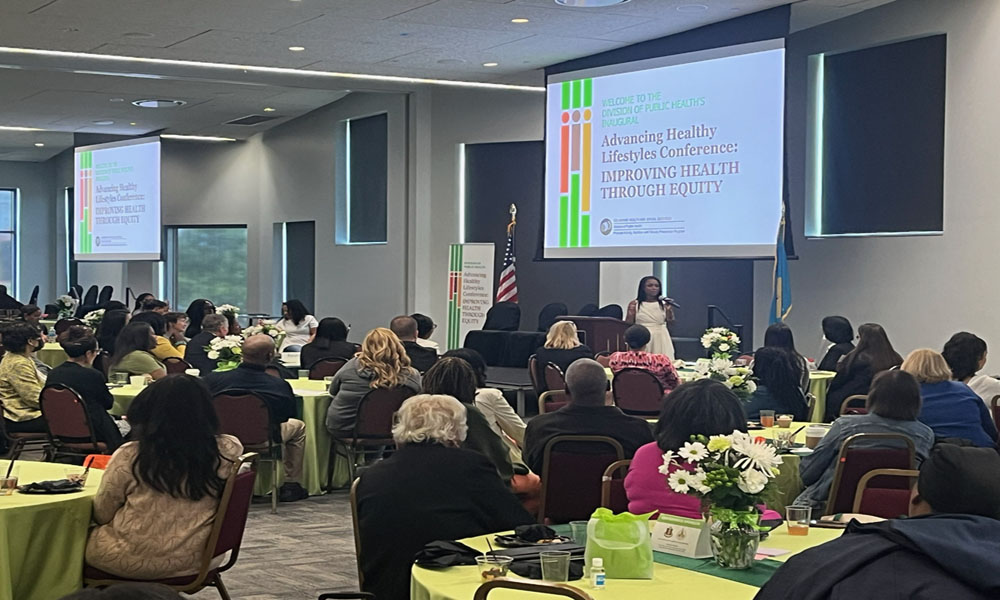
    Division Of Public Health Hosts Inaugural Advancing Healthy Lifestyles Conference

    DOVER, Del. (May 18, 2023)– The Delaware Division of Public Health’s (DPH) Physical Activity, Nutrition and Obesity Prevention Program (PANO) is hosted its inaugural Advancing Healthy Lifestyles Conference on Thursday, May 18, 2023. Focusing on the theme of ‘Improving Health Through Equity,’ this first-of-its-kind, in-person event offered participants opportunities to learn from national, regional and local leaders in achieving health equity. Participants also exchanged ideas and shared best practices to help end disparities throughout the state and empower healthier living for all Delawareans.

    With an ultimate vision of removing barriers to health equity that exist in Delaware, the conference brought together public health policymakers, nonprofit advocates of health and wellness, educators, health care providers and researchers. The event was developed to build on Governor John Carney’s policy objectives for launching a statewide effort to reduce the impact of obesity and chronic disease, and to evaluate and implement the recommendations of the Delaware Cancer Consortium. The event was held at Delaware State University’s Martin Luther King Jr. Conference Center.

    “It didn’t take long into the pandemic to see the way COVID-19 worked to further widen the chasm of health disparities,” said Department of Health and Social Services Secretary Molly Magarik. “Our goal is to ensure all Delawareans have access to the tools they need to lead longer, healthier lives. Through this conference, we are leveraging the lessons from the pandemic to infuse new energy into our work and drove even greater success in achieving health equity.”

    The conference’s key objectives, which parallel those of the Advancing Healthy Lifestyles initiative, are to:

    • Reduce obesity and other chronic conditions
    • Achieve health equity by focusing on coordinated school health and wellness, community capacity building, and workplace wellness
    • Foster connections between youth-serving organizations and schools to support the health and well-being of youth across the state
    • Support the efforts of community-based organizations implementing policy, systems and environmental changes
    • Help advance workplace wellness

    Conference Highlights

    Throughout the day, participants were inspired by remarks from local dignitaries and healthy lifestyle advocates, including Lt. Governor Bethany Hall-Long; DHSS Secretary Molly Magarik; and keynote presenter, U.S. Olympian Dominque Dawes.

    The conference panel discussion covered Improving Health Through Equity: A Regional Perspective, led by the following individuals:

    • Aniekan Ebitu, MPH, National Senior Director of Public Health Programs, National Hypertension Control Initiative, American Heart Association
    • Keisha Morris, Director of Talent Management and Workforce Development Bayhealth
    • Dalton Paxman, PhD, Regional Health Administrator, Office of Regional Health Operations, Region 3, U.S. Department of Health and Human Services
    • Moderator: Scott Siegel, PhD, MHCDS, Director of Cancer Control & Population Sciences, Helen F. Graham Cancer Center & Research Institute, ChristianaCare

    There was also a robust agenda of opportunities for sharing, learning, and networking:

    • Concurrent breakout sessions– Addressing Systemic Bias in Health Care; Improving Health Through Community Collaborations; and The Trauma of Racism and Health Disparities
    • Interactive peer-to-peer roundtable discussions
    • Information resource room
    • Networking reception

    Additional Information

    Learn more about the Division of Public Health’s Advancing Healthy Lifestyles initiative at https://www.healthydelaware.org/Community-Partners/Advancing-Healthy-Lifestyles.

    Data

    According to DPH’s 2021 Behavioral Risk Factor Survey (BRFS), obesity among Delaware adults has more than doubled from 13% in 1992 to 33.9%. The prevalence of reported obesity was higher among Black and Hispanic adults and individuals with a disability than among white adults and individuals without a disability.

    The prevalence of Delaware adults diagnosed with diabetes has also doubled, from 4.9% in 1991 to 12% in 2021, according to the 2021 BRFS. Of Delawareans surveyed, 18.2% of adults ages 55 to 64 and 23.4% of adults age 65 and older reported having diabetes.

    In addition, 15% of black adults reported having diabetes compared with 11.4% of white adults. Among Delaware adults diagnosed with diabetes, 44.5% reported having a disability.

    DPH AHL Conference

    On Thursday, May 18, 2023, Dominique Dawes, U.S. Olympian and keynote speaker, addresses conference participants at Delaware State University’s Martin Luther King Jr. Conference Center./Photo courtesy of Justin Windheim

    Anyone who is deaf, hard of hearing, Deaf-Blind or speech disabled can contact DPH by dialing 711 first using specialized devices (i.e. TTY, TeleBraille, voice devices). The 711 service is free and to learn more about how it works, please visit delawarerelay.com.

    DPH, a division of DHSS, urges Delawareans to make healthier choices with the 5-2-1 Almost None campaign: eat 5 or more fruits and vegetables each day, have no more than 2 hours of recreational screen time each day (includes TV, computer, gaming), get 1 or more hours of physical activity each day, and drink almost no sugary beverages.

    Delaware Health and Social Services is committed to improving the quality of the lives of Delaware’s citizens by promoting health and well-being, fostering self-sufficiency, and protecting vulnerable populations.

    DPH Reports Successful Dea Prescription Drug Take-Back Day For Delaware

    DOVER (May 9, 2023)”¯- The Delaware Division of Public Health (DPH) recently held its 24th”¯Prescription Drug Take-Back Day event. Organized nationally by the Drug Enforcement Administration (DEA), Prescription Drug Take-Back Day is operated locally by”¯DPH. The twice-a-year event (April and October) aims to reduce the risk of prescription medications being diverted for misuse and has resulted in 114,470″¯pounds of medication being collected in Delaware since 2010. Properly discarding unused medications through this event is an important ongoing activity to address the nationwide opioid epidemic. Doing so reduces the risk of addiction by keeping prescription medications out of the hands of people who may misuse, abuse or divert them, and helps reduce the risk of drug overdoses.”¯

    At the spring 2023 event, held April 22, Delawareans discarded their expired or unused medications at locations statewide. A total of 4,629 pounds of medications were collected from 22 Delaware locations, an increase from last fall’s 4,200 pounds. Disposal for sharps and needles”¯was available at the Laurel, Middletown, Milton and Wilmington Police Departments, where over 119 pounds of sharps were collected. The safest way to dispose of needles is to use a designated sharps disposal”¯container, which”¯is delivered to incinerators to avoid accidental exposure.”¯

    “¯”¯”¯

    In addition to the sites that participated in National Prescription Drug Take-Back Day activities, permanent medicine drop-off locations are available year-round. DPH and community partners also distribute Deterra bags (medication deactivation bags) to use at home.”¯”¯Visit https://www.helpisherede.com/understanding-addiction/safe-drug-storage-and-disposal for more information.

    To further enhance overdose prevention and education efforts, six”¯of the DEA National Prescription Drug Take-Back locations (New Castle, Middletown, Dover, Milford,”¯and Laurel”¯Police Departments”¯and SUN Behavioral Delaware) also performed”¯Overdose Response Training. Participants received free Narcan kits after the training. It is recommended that anyone who has a prescription opioid or has friends and family who use opioid prescriptions or illicit drugs receive this training and the overdose reversal medication, Narcan. For other community training events and to learn where you can get free Narcan, visit:”¯HelpisHereDE.com/overdose-prevention.

    If you or a loved one are struggling with addiction in Delaware, call DHSS’ 24/7 Crisis Hotline to be connected to treatment and recovery options. In New Castle County, call 1-800-652-2929. Or in Kent and Sussex counties, call 1-800-345-6785. For free 24/7 counseling, coaching, and support, as well as links to mental health, addiction, and crisis services call the Delaware Hope Line at 833-9-HOPEDE. To search online for treatment and recovery services in Delaware or nearby states, visit HelpIsHereDE.com.

    Anyone who is deaf, hard of hearing, Deaf-Blind or speech disabled can contact DPH by dialing 711 first using specialized devices (i.e. TTY, TeleBraille, voice devices). The 711 service is free and to learn more about how it works, please visit delawarerelay.com.

    DPH, a division of DHSS, urges Delawareans to make healthier choices with the 5-2-1 Almost None campaign: eat 5 or more fruits and vegetables each day, have no more than 2 hours of recreational screen time each day (includes TV, computer, gaming), get 1 or more hours of physical activity each day, and drink almost no sugary beverages.

    Delaware Health and Social Services is committed to improving the quality of the lives of Delaware’s citizens by promoting health and well-being, fostering self-sufficiency, and protecting vulnerable populations.

    DPH Announces April 22 As National Dea Prescription Drug Take-Back Day For Delaware

    DOVER (April 17, 2023)– Delaware will hold its 24th National DEA Prescription Drug Take-Back Day event on Saturday, April 22, 2023. Delawareans can discard their expired or unused medications at locations statewide between 10:00 a.m. and 2:00 p.m. Disposal for sharps and needles will be available at select locations. Overdose Response Education, with free Narcan kits available at select locations.

    Organized nationally by the Drug Enforcement Administration (DEA), Prescription Drug Take-Back Day is operated locally by DPH. The twice-a-year event aims to reduce the risk of prescription medications being diverted for misuse and has resulted in 114,470 pounds of medication being collected in Delaware since 2010. In October 2022 alone, a total of 4,200 pounds of unneeded medication were collected across 23 Delaware locations. Properly discarding unused medications through this event is an important ongoing activity to address the nationwide opioid epidemic. Doing so reduces the risk of addiction by keeping prescription medications out of the hands of people who may misuse, abuse, or divert them, and helps reduce the risk of drug overdoses.

    “By safely turning in your prescription medications that have expired, or that you no longer need on Drug Take-Back Day, you can help fight the epidemic in Delaware,” said Kate Brookins, director of the Office of Health Crisis Response.

    In addition to the sites participating in National Prescription Drug Take-Back Day activities, there are permanent medicine drop-off locations available year-round. In addition to medicine drop-off locations, DPH and community partners also distribute Deterra bags (medication deactivation bags) to use at home.

    The medications to be disposed of at the Take-Back Day locations must be in a container such as a pill bottle, box, blister pack, or zipped plastic bag, with personal information removed. Liquid medications must be in their original containers. Besides medications, vape pens and e-cigarettes will be collected if the batteries are removed.

    A total of 22 locations in Delaware are currently participating in the National Prescription Drug Take-Back Day event. You can find the current list of locations at HelpisHereDE.com/drug-take-back-day.

    Delawareans can bring any used needles to be disposed of properly at the following four locations: Laurel, Milton, Middletown, and Wilmington police departments. The used needle disposal containers are only for the public and not commercial entities, and individuals will need to sign a waiver stating that needles are from home use. The safest way to dispose of needles is to use a designated Sharps disposal container, which is delivered to incinerators to avoid accidental exposure.

    To further enhance overdose prevention and education efforts, seven of the DEA National Prescription Drug Take-Back locations (Wilmington, New Castle, Middletown, Dover, Milford, and Laurel Police Departments and SUN Behavioral Delaware) will also offer Overdose Response Training and Narcan distribution to the public, in coordination with the Division of Public Health. It is recommended that anyone who has a prescription opioid or has friends and family who use opioid prescriptions or illicit drugs receive this training and the overdose reversal medication, Narcan. For other community trainings and where you can get free Narcan, visit: HelpisHereDE.com/overdose-prevention.

    If you or a loved one are struggling with addiction in Delaware, call DHSS’ 24/7 Crisis Hotline to be connected to treatment and recovery options. In New Castle County, call 1-800-652-2929. Or in Kent and Sussex counties, call 1-800-345-6785. For free 24/7 counseling, coaching, and support, as well as links to mental health, addiction, and crisis services call the Delaware Hope Line at 833-9-HOPEDE. To search online for treatment and recovery services in Delaware or nearby states, visit HelpIsHereDE.com.

    Anyone who is deaf, hard of hearing, Deaf-Blind or speech disabled can contact DPH by dialing 711 first using specialized devices (i.e. TTY, TeleBraille, voice devices). The 711 service is free and to learn more about how it works, please visit delawarerelay.com.

    DPH, a division of DHSS, urges Delawareans to make healthier choices with the 5-2-1 Almost None campaign: eat 5 or more fruits and vegetables each day, have no more than 2 hours of recreational screen time each day (includes TV, computer, gaming), get 1 or more hours of physical activity each day, and drink almost no sugary beverages.

    Delaware Health and Social Services is committed to improving the quality of the lives of Delaware’s citizens by promoting health and well-being, fostering self-sufficiency, and protecting vulnerable populations.

    Delaware Medicaid Annual Eligibility Renewals Underway

    NEW CASTLE, Del. (April 12, 2023)– The Delaware Department of Health and Social Services (DHSS) has resumed the standard eligibility renewal process for Medicaid and CHIP recipients as of April 1, 2023, as required by federal law. Annual renewals were not required from March 2020 to March 2023 during the federal Public Health Emergency designation. Federal legislation, signed into law on December 29, 2022, set a specific date to resume renewals, regardless of when the Public Health Emergency ends.

    As of January 2023, approximately 315,000 Delawareans were enrolled in Medicaid. With annual renewals underway, DHSS estimates 40,000 to 50,000 Delaware residents who were receiving continuous coverage due to the Public Health Emergency may no longer qualify for Medicaid or CHIP, also known as the Delaware Healthy Children Program, and may be disenrolled.

    Between April 2023 and April 2024, DHSS is reviewing every member’s eligibility and, where approved by state or federal rules, using available data sources to automatically renew members. If DHSS cannot auto-renew a person’s coverage using available and approved data sources, the member will receive a pre-populated renewal letter by mail. Delaware Medicaid and its Managed Care Organization partners are also using texts, email, and social media when available to enhance outreach efforts.

    A member can complete their renewal through a variety of ways: online through Delaware ASSIST, by phone, by mail, by fax, or at any Division of Social Services (DSS) office locations. Individuals who need assistance filling out their renewal can call the Division of Social Services Customer Service Unit at 1-866-843-7212.

    “Over the past three years, the state’s public assistance programs have been a crucial safety net for so many Delawareans,” said Molly Magarik, Secretary of the Delaware Department of Health and Social Services (DHSS). “As we are undertaking the monumental task of restarting eligibility renewals again, our goal is to ensure Medicaid members who continue to be eligible stay enrolled and that those who are determined to no longer be eligible get connected to affordable coverage.”

    The most important thing Medicaid and CHIP members can do is to update their mailing address, email and phone numbers with DMMA and sign up for electronic notifications. Contact the Change Report Center at (302) 571-4900, Option 2 or send changes via fax to (302) 571-4901. Changes and notification preferences can also be made at ASSIST Self Service https://assist.dhss.delaware.gov/. Individuals can find out more information about the renewal process at de.gov/medicaidrenewals.

    “There are many Delaware residents who qualified for Medicaid coverage for the first time during the Public Health Emergency who have never had to complete an annual renewal before,” said Steven Costantino, Director of Health Care Reform for DHSS. “This is why it is critical that we have the most accurate information available for each member, and that individuals on Medicaid watch out for communication and take the necessary steps to renew. We do not want anyone who is eligible for Medicaid to be disenrolled.”

    Health care providers and others who provide services to members can help by reminding their Medicaid members to look for and complete their Medicaid renewals this year and to encourage them to start exploring other coverage options if they believe they will no longer qualify for their current coverage.

    Special Enrollment Period Authorized for Health Insurance Marketplace

    To help individuals who are no longer eligible for Medicaid coverage, the federal government has authorized a Special Enrollment Period for the Health Insurance Marketplace. Individuals who lose their coverage through Medicaid and CHIP any time between March 31, 2023, and July 31, 2024, will be eligible for a marketplace special enrollment period. After a person is determined eligible for the marketplace, they will have 60 days to choose a plan, and their coverage will start the first day of the month after the plan is selected.

    Many enrollees can find plans on the Health Insurance Marketplace that cost less than $10 a month. Plans cover services like prescription drugs, doctor visits, urgent care, hospital visits, and more.

    Delawareans who no longer qualify for Medicaid should ensure that they do not experience a gap in health insurance coverage, but choosing the right private health insurance plan can seem daunting. Trinidad Navarro, the Commissioner of the Delaware Department of Insurance, suggests that a good first step would be to visit ChooseHealthDE.com to locate a local, federally registered/approved Navigator for assistance in enrolling in the Federally Facilitated Marketplace.

    In Delaware, assistance enrolling in the Health Insurance Marketplace is available from certified Health Insurance Marketplace Navigator teams at Westside Family Healthcare and Quality Insights. To be connected to a trained Navigator, call:

    • Westside Family Healthcare: New Castle County: 302-472-8655, Kent or Sussex counties: 302-678-2205
    • Quality Insights: 1-844-238-1189

    Some individuals who are found to be ineligible for Medicaid may be eligible for or already enrolled in Medicare. If that’s the case, the Department’s Delaware Medicare Assistance Bureau (DMAB) (302-674-7364) is ready to help with locating supplemental Medicare and Prescription coverage.

    “Our DMAB team is friendly, knowledgeable and approachable, and they are always there to help older Delawareans get the best possible coverage to supplement their Medicare plans,” said Commissioner Navarro.

    Be Aware of Potential Insurance Scams

    Additionally, Commissioner Navarro pointed out that buyers should beware of offerings that say they are “plans” that are actually not health insurance.

    “As a general rule, if an offer seems too good to be true– it probably is,” Commissioner Navarro said. “Please be careful when searching for insurance on the Internet as you may accidently access a website that looks like it is advertising health insurance when it actually is not.”

    For example, buyers may receive aggressive advertising from discount plans or discount cards offering discounts on health care for a monthly fee. Another example is so called “health sharing” plans, which allow buyers to join a group or association that will take a participant’s monthly payments, put them in a savings account or trust with other participants’ money, and then help pay some of the participant’s health care costs, as needed. Neither of these “plans” are health insurance plans, and participants do not have the same protections as they would under major medical health insurance.

    It has also been reported that scammers may be calling or texting individuals that receive Medicaid asking for money to help with the Medicaid renewal process. Scammers might pretend to be from a real organization or a government agency. They can use phone, text or email to try to steal money or something of value from you. If someone contacts you and requests money for help with your Medicaid renewal they are not a representative of DHSS. DHSS will never ask you for money or for your credit card information.

    The Delaware Department of Justice also reminds residents to be extra diligent about telephone scams by:

    • Never agreeing to pay any fine or other money over the phone, including by purchasing a money order or gift card at a store and providing the number to someone over the phone or by email. Government agencies do not take payments this way.
    • Not answering calls from unknown numbers or unfamiliar persons. Scams can be “spoofed” to appear to be coming from a local number, even though the call is originating from out of state or overseas.
    • Hanging up on aggressive callers, particularly those who threaten arrest.

    Consumers who believe they may have been scammed may call the Consumer Protection Unit’s toll-free Consumer Hotline at (800) 220-5424, or e-mail consumer.protection@delaware.gov. Consumers can also report scammers’ phone numbers to the National Do Not Call Registry and file complaints at www.donotcall.gov.

    For more information about the Medicaid renewal process, visit de.gov/medicaidrenewals.

    Delaware Health and Social Services is committed to improving the quality of the lives of Delaware’s citizens by promoting health and well-being, fostering self-sufficiency, and protecting vulnerable populations.

    The Delaware Cancer Consortium Biennial Retreat: Vision. Purpose. Action. Coming Together To Eliminate Cancer Disparities

    DOVER, Del. (April 10, 2024)– On April 9, 150 Delaware Cancer Consortium (DCC) members gathered for their 2024 retreat for presentations by prominent local and national speakers, including four cancer survivors who shared their diagnosis, care, and experience living with cancer.

    The theme was Vision. Purpose. Action. Coming Together to Eliminate Cancer Disparities, aligning with DCC’s goal to implement culturally inclusive initiatives that ensure affordable and accessible care.

    The Delaware General Assembly established the DCC in 2001 to reduce Delaware’s cancer incidence and mortality rates. Over the past 23 years, the DCC has produced five five-year plans with innovative cancer control recommendations that guide its members and thousands of dedicated volunteers.

    “Every year, this event renews our passion to give Delawareans the resources they need to lead healthy lives,” said Governor John Carney. “Since the mid-to-late 1990s, Delaware’s cancer mortality rate has decreased substantially. We still have work to do, but thanks to the dedication of our health care workers and the Delaware Division of Public Health, we are on the right track.”

    In the 1990s, Delaware’s cancer death rate ranked second in the nation. Most recent data show the state ranks 15th in cancer mortality and 20th for cancer incidence rate (457.6 per 100,000 in Delaware compared to 442.2 per 100,000 population in the nation), according to the Delaware Cancer Registry for the period 2016-2020.

    Since the creation of the Delaware Cancer Treatment Program in 2004, funding for cancer treatments has been provided to 2,009 Delaware residents as of March 30, 2024.

    • 13,019 Delaware residents were enrolled in the Screening for Life program between calendar years 2017 and 2023, and 8,303 received free breast, cervical, colorectal, lung, or prostate cancer screenings during that time period.
    • The Screening for Life program was created in 1997 and expanded by the Delaware Cancer Consortium in 2002. The program began covering lung cancer screenings in 2015.
    • Each year, the Screening for Life program provides free breast and cervical cancer screenings to over 1,000 women.

    Governor Carney and Lieutenant Governor Bethany Hall-Long signed two proclamations that designate the month of April as Cancer Control Month and Minority Cancer Awareness Month.

    The Cancer Control Month designation urges all Delawareans to get screened for cancer when advised to do so and encourages all health care providers to promote cancer screening “as a powerful opportunity to save lives.” Regular screenings increase the odds of detecting cancer in the early stages, when it is most treatable. It remains a top priority for the DCC to ensure Delawareans have access to regular screenings and know the recommended guidelines.

    According to the Delaware Cancer Registry for the period 2016-2020, 22.4% of new cancer cases in Delaware were detected in the distant stage, compared to 48.3% diagnosed at the local, or early, stage.

    “I’m just going to be candid: knowing your cancer risk– as early as possible– can literally be the difference between life and death,” said Lieutenant Governor Hall-Long, who serves on two DCC committees. “The DCC is working tirelessly to raise awareness and increase accessibility to detect and treat cancer for all Delawareans. We have work to do, but I commend these continued efforts.”

    The DCC and the Division of Public Health’s Bureau of Cancer Prevention and Control work to ensure every Delawarean has access to timely cancer screenings and treatment through the Screening for Life (SFL) Program and the Delaware Cancer Treatment Program. Cancer screenings are covered by insurance or SFL. Delawareans can determine their eligibility for SFL by visiting Healthy Delaware.org or calling the SFL Program at 302-744-1040.

    In a nod to pursing full health equity, the Minority Cancer Awareness Month observance notes that cancer disproportionately affects Delaware’s minority communities and urges them to get cancer screenings when advised to do so.

    According to the Delaware Cancer Registry, for the period 2016-2020, the all-site cancer mortality rate among non-Hispanic Black Delawareans (171.7 people per 100,000 population) was higher than for non-Hispanic White Delawareans (158.9 people per 100,000 population).

    In the 2020 Behavioral Risk Factor Survey, 36% of non-Hispanic White Delawareans reported having a PSA test to detect prostate cancer in the past two years compared to 26% of non-Hispanic Black Delawareans. For 2016-2020, 28.3% of new breast cancer cases were detected in the distant stage among non-Hispanic White Delawareans, compared to 36.7% diagnosed at the distant stage among non-Hispanic Black Delawareans, according to the Delaware Cancer Registry.

    Elle Sheaffer, a five-year cancer survivor of Newark and distinguished speaker at the retreat, is now a DBCC volunteer and leads a flower-arranging course for Cancer Support Community.

    “A lot of people are scared to get help and think they must do it alone, but these resources are here, and they are still helping me thrive,” said Sheaffer.

    For more information on the DCC’s initiatives, committees, upcoming events, and the current five-year plan, visit healthydelaware.org/consortium.

    Cancer Consortium

    Lt.Governor Hall-Long with Community Health Workers

    Anyone who is deaf, hard of hearing, Deaf-Blind or speech disabled can contact DPH by dialing 711 first using specialized devices (i.e. TTY, TeleBraille, voice devices). The 711 service is free and to learn more about how it works, please visit delawarerelay.com.

    DPH, a division of DHSS, urges Delawareans to make healthier choices with the 5-2-1 Almost None campaign: eat 5 or more fruits and vegetables each day, have no more than 2 hours of recreational screen time each day (includes TV, computer, gaming), get 1 or more hours of physical activity each day, and drink almost no sugary beverages.

    Delaware Health and Social Services is committed to improving the quality of the lives of Delaware’s citizens by promoting health and well-being, fostering self-sufficiency, and protecting vulnerable populations.

    Division Of Medicaid And Medical Assistance Announces That All Delaware Managed Care Only Providers Must Register With The Delaware Medical Assistance Program

    NEW CASTLE, Del. (April 5, 2023)– The Delaware Division of Medicaid and Medical Assistance (DMMA) is urging all Managed Care Organization-Only Providers enrolled with a DMMA Managed Care Organization (MCO) to register with the Delaware Medical Assistance Program as required by federal law. Providers who fail to register by Sept. 30, 2023, face having their contracts with Medicaid terminated.

    All In-Network Managed Care Organization Providers are required to verify and enroll their correct ID and address with the Delaware Medical Assistance Program (DMAP) to continue to receive Medicaid reimbursement for services. DMAP sent registration letters to all current In-Network Managed Care Organization Providers in June 2022 to initiate the screening and enrollment process. A large number of providers still have not registered and could be in jeopardy of having their MCO contract terminated.

    “We are very concerned that many providers could have their contracts terminated from the Delaware Medicaid program after September for failure to take this step to meet the federal regulatory requirements,” said Theodore Mermigos, acting director of Division of Medicaid and Medical Assistance. “DMMA has extended the deadline to register before, but we are at the point where there needs to be compliance. Extending beyond Sept. 30, 2023, may not be an option.”

    Providers are strongly encouraged to enroll all their service locations on the DMAP Provider Portal as soon as possible and not wait until the deadline. Providers currently engaged with DMAP are not at risk of suspended payment and/or termination from Delaware Managed Care Organization network participation.

    For more information:

    Delaware Health and Social Services is committed to improving the quality of the lives of Delaware’s citizens by promoting health and well-being, fostering self-sufficiency, and protecting vulnerable populations.

    Delaware Drinking Water Not Impacted By Pa Chemical Spill

    DHSS Press Release

    Molly Magarik, Secretary
    Jen Brestel, Director of Communications
    302-605-0577
    Email: Jennifer.brestel@delaware.gov

    DPH Media Contact:
    Cassandra Gotto-White, Interim Communications Section Chief
    Email: DPHMedia@Delaware.gov

    Date: March 27, 2023
    DHSS-3-2023

    The Division of Public Health (DPH) on Sunday shared that Delaware drinking water has not been impacted by the chemical spill in a tributary of the Delaware River in Bristol, PA.

    “Delaware’s drinking water has not been impacted by the spill in Pennsylvania,” said DPH Interim Director Dr. Rick Hong. “Unlike neighboring states, water treatment facilities that service Delaware do not take in water directly from the Delaware River. There is no impact to Delawareans at this time. We continue to monitor the situation with our water treatment facilities and the Department of Natural Resources and Environmental Control.”

    Delaware Health and Social Services is committed to improving the quality of the lives of Delaware’s citizens by promoting health and well-being, fostering self-sufficiency, and protecting vulnerable populations.