Site Logo Delaware Health and Social Services

    Nominations For Governor’s Youth Volunteer Service Awards Accepted Through March 27

    DOVER (Feb. 25, 2022)– Nominations for the Governor’s Youth Volunteer Service Awards are being accepted by the State Office of Volunteerism through March 27. These awards recognize the important contributions made by Delaware’s youth volunteers to their communities. Award recipients will be announced in May.

    “The commitment to service demonstrated each year by young volunteers in Delaware, as individuals or as part of a group, is inspiring,” said Governor John Carney. “Our state, our lives and our world are made better thanks to the spirit of unselfish volunteerism shown by these young people.”

    To be eligible, the nominated individuals and group members must be 17 or younger during the time of service. Individual nominees must have volunteered a minimum of 100 hours and groups a minimum of 250 hours between January and December of 2021, although additional volunteer activity can also be highlighted to show long-term commitment. Volunteers will be honored in the following categories:

    • Individual: An exceptional individual 17 or younger who volunteers.
    • Team/Group: Two or more individuals who worked on the same project.
    • Emerging Volunteer Leader: An individual 17 or younger who has demonstrated exceptional leadership abilities.

    “Even in the face of challenges brought on by the COVID-19 pandemic, our young people found innovative and thoughtful ways to volunteer and help others throughout 2021,” said DHSS Secretary Molly Magarik. “Please join us in recognizing those rising to the occasion and nominate young volunteers in Delaware who are making a difference though their service.”

    The Governor’s Youth Volunteer Service Awards are sponsored by the Office of the Governor, the Department of Health and Social Services’ Division of State Service Centers, the State Office of Volunteerism, and the Governor’s Commission on Community and Volunteer Service.

    “This is an opportunity to nominate young Delawareans who have found their superpower through service in their own communities and helped to inspire volunteerism across all age groups,” said Renée Beaman, Director of the Division of State Service Centers.

    The nomination form is available at https://volunteer.delaware.gov/youth-awards. Nominators may also request a form by emailing dhss_VolunteerDelaware@delaware.gov or calling 302-857-5014. Nominations that are not submitted online must be delivered by Friday, March 25, to the State Office of Volunteerism, Attn: Governor’s Youth Volunteer Service Awards, c/o Volunteer Delaware, Williams State Service Center, 805 River Road, Dover, DE 19901.

    For more information about the awards or volunteer opportunities, go to volunteer.delaware.gov or contact Suzanne Farris, Volunteer Services Administrator, at 302-857-5006 or Suzanne.Farris@delaware.gov

    Delaware Health and Social Services is committed to improving the quality of the lives of Delaware’s citizens by promoting health and well-being, fostering self-sufficiency, and protecting vulnerable populations.

    Delaware Paramedics Administer 250th Unit Of Whole Blood For Prehospital Care, Reach More Significant Milestones

    DOVER, Del. (Dec. 9, 2024)– Paramedics in all three Delaware counties achieved significant milestones in administering whole blood for prehospital care between Saturday, Nov. 23 and Monday, Nov. 25, 2024. A leader in prehospital care, the state has also become the first in the nation that has paramedic agencies in every county providing whole blood for patients before they reach the hospital.

    On Nov. 23, New Castle County Emergency Medical Services (EMS) gave the 150th unit in their county and soon after, the 151st, which became the 250th unit in the state. Sussex County also achieved a significant milestone on Nov. 25 when it administered its 100th unit of whole blood. Additionally, Kent County EMS delivered their first unit on Nov. 24, which despite the critical nature of the patient’s injuries, provided improvement in vital signs.

    Paramedics value whole blood because all of its components– red blood cells, clotting factors, platelets, and plasma– are present. Their most common application is when patients have suffered traumatic injuries resulting in massive blood loss.

    “We are incredibly proud of these achievements and the positive impact the treatment has had on our community,” said Dr. Robert Rosenbaum, state medical director, Emergency Medical Services and Preparedness Section at the Delaware Division of Public Health. “Every unit of blood administered represents another patient that has been given a better chance at survival and recovery.”

    Paramedics in New Castle and Sussex counties first used whole blood as a pilot (test) program since the treatment was approved in May 2023. Early success led to statewide adoption for all paramedic agencies with Kent County currently carrying blood and Delaware State Police paramedics adding blood in early 2025. Nationally, less than 10% of EMS agencies carry and administer whole blood, according to the National Association of State EMS Officials.

    The program’s success is attributed to the collaborative efforts of county paramedic agencies and DPH’s Office of EMS (OEMS) with additional support from Delaware Emergency Management Agency and in partnership with the Blood Bank of Delmarva. The processes showing significant patient benefits are being shared with EMS systems across the country as a guide for establishing EMS whole blood programs, serving as a benchmark for other states and highlighting innovative medical interventions.

    For more information about OEMS, visit https://www.dhss.delaware.gov/DPH/ems/ems.html

    250th Unit of Blood

    The Delaware Division of Public Health (DPH), a division of the Delaware Department of Health and Social Services, is a nationally accredited public health agency recognized by the Public Health Accreditation Board for its outstanding dedication to driving change through innovation.

    Anyone who is deaf, hard of hearing, Deaf-Blind or speech disabled can contact DPH by dialing 711 first using specialized devices (i.e. TTY, TeleBraille, voice devices). The 711 service is free and to learn more about how it works, please visit delawarerelay.com.

    Delaware Health and Social Services is committed to improving the quality of the lives of Delaware’s citizens by promoting health and well-being, fostering self-sufficiency, and protecting vulnerable populations.

    DPH Oral Health Screening Programs Supports Students’ Healthy Smiles And Expands Access To Dental Care

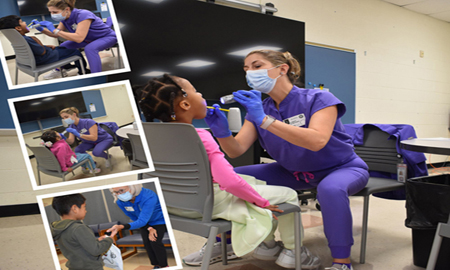
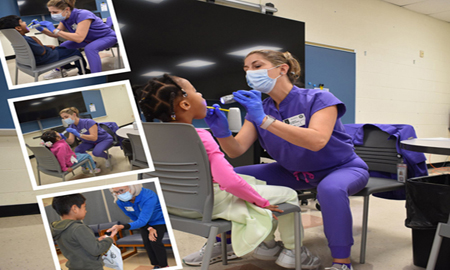
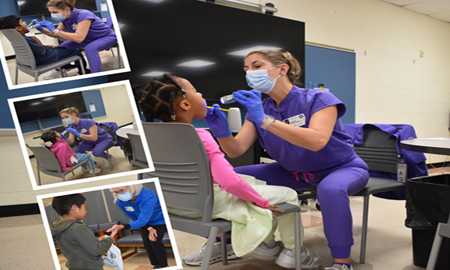
    DOVER, DEL (Oct. 29, 2024)– Kindergarteners across Delaware are participating in the Kindergarten Oral Health Screening Program for the first time this school year, provided by the Bureau of Oral Health and Dental Services (BOHDS) within the Delaware Division of Public Health (DPH). This new annual program is intended to improve the oral health of Delaware children and prepare them for a lifetime of good oral health.

    In partnership with the Delaware Department of Education and school nurses, BOHDS facilitates all screenings. During each no-cost screening, dental hygienists or dentists inspect the mouths of each child using disposable mouth mirrors and flashlights. The screeners look for symptoms such as pain, swelling, infections, decay, or dental sealants. Each screening takes two minutes or less. After completing their evaluation, students receive a dental report card that includes a toothbrush, toothpaste, dental floss, and dental resource guide along with the dental screening results to take home.

    The kindergarten program was created with the passage of House Bill (HB) 83. Under this bill, every public school and charter school must give a dental screening to students in kindergarten by the last day of the school year starting during the 2024-2025 school year.

    “The passing of HB83 is a momentous step towards improving children’s oral health,” said State Dental Director Dr. Nick Conte. “We can prevent dental issues from developing by prioritizing early dental care, leading to long-term health benefits. In addition, the information collected at each school helps to target future public health efforts at schools where children need dental care the most.”

    Oral health problems can prevent a child from eating and sleeping. As a result, it can impair their ability to concentrate and learn. Thirty four million school hours are lost every year due to unplanned and acute dental care. During the 2021-2022 academic year, 45% of Delaware’s kindergarteners had at least one tooth with decay experience and 22% had untreated tooth decay according to the BOHDS’s report, A Public Health Update: The Oral Health of Delaware’s Kindergarten and Third Grade Children in 2022. Despite being nearly 100% preventable with proper oral hygiene and access to dental care, tooth decay (cavities) remains the most common chronic disease in children.

    Through the Delaware Smile Check Program, children and adults covered by Delaware Medicaid or the Delaware Healthy Children Program (CHIP) are eligible to receive free and optional dental screenings, fluoride treatments, and toothbrushes when they are screened in person at participating locations in Delaware. Preventive treatment and case management are also included for qualifying students (those without dental insurance, Medicaid or CHIP) at priority schools. For more information about the Delaware Smile Check Program, visit https://dethrives.com/programs/healthy-smiles#services.

    Both the Kindergarten Oral Health Screening Program and the Delaware Smile Check Program are not intended to replace a dentist’s dental examination. There is no diagnosis provided by these dental screenings. Based on the visual signs of dental problems following a screening, additional dental examinations and x-rays may be necessary. Through the kindergarten program, parents and caregivers will be notified by the dentist report card and staff can help find a provider. As part of the Smile Check Program, a case manager shares dental screening results with participants, provides oral health education, and schedules appointments with a dentist. Also offered are assistance with barriers related to insurance, providers, transportation, childcare and directing them to other social services.

    Each program aims to provide children with prompt preventive and therapeutic oral health care, as well as improving oral health literacy. Every child’s take-home toothbrush and bag contains the number for the BOHDS Dentist Helpline. For help in finding a dentist, insurance questions, and dental screening questions, adults can call the Dentist Helpline at 302-318-8850.

    ORAL HEALTH SCREENING

    The Delaware Division of Public Health (DPH), a division of the Delaware Department of Health and Social Services, is a nationally accredited public health agency recognized by the Public Health Accreditation Board for its outstanding dedication to driving change through innovation.

    Anyone who is deaf, hard of hearing, Deaf-Blind or speech disabled can contact DPH by dialing 711 first using specialized devices (i.e. TTY, TeleBraille, voice devices). The 711 service is free and to learn more about how it works, please visit delawarerelay.com.

    Delaware Health and Social Services is committed to improving the quality of the lives of Delaware’s citizens by promoting health and well-being, fostering self-sufficiency, and protecting vulnerable populations.

    Take Action To Avoid Accidents This Falls Prevention Awareness Week With Statewide Events

    DOVER, DEL. (Sept. 16, 2024)– The Delaware Coalition for Injury Prevention’s Falls Prevention Team asks Delawareans to reduce broken bones, head injuries, and disabilities by preventing falls. Governor John Carney and Lieutenant Governor Bethany Hall-Long proclaimed Sep. 23 to 27, 2024 as Falls Prevention Awareness Week.

    A fall can impact a person’s mobility, functionality, and independence. In the U.S., falls are the leading cause of fatal and non-fatal injuries among adults aged 65 and older, according to the Centers for Disease Control and Prevention (CDC). Unintentional falls were the leading cause of traumatic brain injury hospitalizations among U.S. individuals aged 10 and older in 2016 and 2017, and hip fractures due to a fall accounted for 88% of emergency department visits and hospitalizations among U.S. adults aged 65 and older in 2019, according to the CDC. Every year in the U.S., one in four falls among adults 65 and older leads to 41,000 deaths, 3.6 million emergency department visits, and 1.2 million hospital stays, the CDC says.

    In Delaware in 2023, there were 3,483 falls among individuals aged 65 and older, and 923 of them resulted in a head injury, according to the Delaware Trauma Registry of the Delaware Trauma System of Care. According to Delaware Trauma System data, in 2023, Delaware men had a disproportionately higher number of falls compared to Delaware women in all ages groups, except for over the age of 70, which were higher among women.

    “As a nurse, I know staying healthy and safe takes an all-hands-on-deck approach: there are steps you can take as well as efforts from businesses, organizations, churches and schools, said Lt. Governor Hall-Long, PhD, RN. “Aging safely can occur when adults of all ages visit their health care provider yearly to review medications and physical activity levels, and get a fall risk assessment. Hearing and vision exams are also key to reduce the risk of falling as well as engagement in balance classes. A strong, healthy Delaware is powered by strong, healthy residents.”

    A Matter of Balance classes are held in communities throughout the state. Call Volunteer Delaware 50+ at 302-515-3020 or visit Bayhealth.org/Classes to sign up.

    ChristianaCare offers the ThinkFirst to Prevent Falls program which addresses home modifications, medications, balance, healthy eating, and other strategies to prevent falls. ChristianaCare also offers Fall Prevention Education for Caregivers, a seminar that educates first time and veteran caregivers how to implement falls reduction strategies in their home and community. The seminar shares medications related to falls, community resources, balance programs, and resources from the National Council on Aging (NCOA) and CDC. These classes are available in person at no cost. To schedule these programs and obtain more information, contact injuryprevention@christianacare.org.

    Find free fall risk screening and prevention information at the following events:

    • Sept. 24, 9:30 a.m. to 10:30 a.m.– Free Fall Risk Screening at Mid-County Senior Center, First Regiment Rd., Sherwood Park II, Wilmington, Del., 19808 provided by University of Delaware Physical Therapy students. The screening is open to members of the public who are over the age of 50.
    • Sept. 25, 11:00 a.m. to 1:00 p.m.– Free Fall Risk Screening at Modern Maturity Center, West Conference Room, 1121 Forrest Avenue, Dover, Del. 19904 provided by Delaware State University (DSU) Nursing and Master of Occupational Therapy students. The Falls Prevention Team will lead a 12:15 p.m. bingo game with prizes courtesy of DSU. It is open to the public.
    • Oct. 3, 12:00 p.m. to 3:00 p.m.– Free Fall Risk Screening at Milford Senior Center, Ireland Room, 111 Park Avenue, Milford, Del. 19963 provided by Delaware State University (DSU) Nursing and Master of Occupational Therapy students. It is open to the public, but they must RSVP to 302-422-3385. At 12:30 p.m., the Falls Prevention Team will lead a bingo game with prizes courtesy of DSU and the Division of Public Health Diabetes and the Heart Disease Prevention and Control Program.

    Reduce falls by following these recommendations from the Falls Prevention Team:

    • Engage in consistent physical fitness activities and balance exercises, eat nutritious foods and beverages, stay hydrated, and get enough sleep.
    • Receive regular hearing and vision exams and review medications with your health care provider and pharmacist.
    • Wear shoes in good condition with proper fit, tread, and support to aid in ambulation. Individuals at risk of falls should wear shoes that fit around their feet with no open backs to avoid falling out of them.
    • Reduce tripping hazards by keeping homes, yards, and public areas clutter-free. Use motion-activated night lights and keep walkways and parking areas well lit. Install grab bars in key areas such as stairs and bathrooms. Do not let pets get underfoot; teach them basic commands like “sit” and “stay”.
    • Take canes and walkers with you to provider visits so the provider can ensure a proper fit.

    Communities and public spaces can increase accessibility when they:

    • Have curb cuts, ramps, and slopes meet state and local safety codes and the guidelines provided by the Americans with Disabilities Act. Curb cuts, tactile surface pavers, slopes, contrasting colors, and other universal design elements especially help individuals who use walkers and wheelchairs, who push strollers, and who have a hard time lifting their feet onto the curb.
    • Provide designated parking for people with mobility challenges.
    • Maintain ramps and walkways and providing appropriate lighting.
    • Install handrails, ramps, and automatic doors and keeping them free of hazards.
    • Use floor mats with flat and secured edges that do not curl up. Absorbent floor mats catch rain, snow, and spilled drinks.

    For more information about preventing falls and falls data, visit: the DCIP at https://www.dhss.delaware.gov/DPH/ems/ipfall.html, the CDC’s Stopping Elderly Accidents, Deaths and Injuries (STEADI) program at https://www.cdc.gov/steadi/index.html, and NCOA at https://www.ncoa.org/page/falls-prevention-awareness-week-toolkit.

    Fall Prevention Week

    The Delaware Division of Public Health (DPH), a division of the Delaware Department of Health and Social Services, is a nationally accredited public health agency recognized by the Public Health Accreditation Board for its outstanding dedication to driving change through innovation.

    Anyone who is deaf, hard of hearing, Deaf-Blind or speech disabled can contact DPH by dialing 711 first using specialized devices (i.e. TTY, TeleBraille, voice devices). The 711 service is free and to learn more about how it works, please visit delawarerelay.com.

    Delaware Health and Social Services is committed to improving the quality of the lives of Delaware’s citizens by promoting health and well-being, fostering self-sufficiency, and protecting vulnerable populations.


    DPH Invites Public Comment On 2023 Delaware Statewide Health Assessment

    DOVER, Del. (Sept. 6, 2024)– The Delaware Division of Public Health (DPH) and Delaware SHA/SHIP Partnership Coalition are seeking public input on the draft 2023 Delaware State Health Assessment (SHA), a statewide assessment identifying the primary health needs of Delawareans. The SHA is conducted every five years and will inform the co-creation of a State Health Improvement Plan (SHIP) with the participation of stakeholders from many sectors.

    A copy of the SHA draft plan and the link to the public comment survey can be found on the SHIP website at https://delawareship.org. Comments can also be submitted at info@delawareship.org. The public comment survey is available at Qualtrics Survey | SHA Public Comment Period. The deadline for comment submissions is the close of business on Sept. 20, 2024.

    The SHA process was led by the University of Delaware’s Epidemiology Program and Partnership for Healthy Communities and included a series of community health assessments (i.e., surveys) and community conversations in Delaware’s three counties. The goal of the SHA is to understand the status of health and well-being, the factors that influence health outcomes, how these factors are experienced differently by place and population, and the challenges and assets of communities. Based on the data in the SHA, the cross-sector Partnership Coalition will identify priority areas of concern and strategies to improve health and well-being so that all Delawareans have the chance to thrive.

    The SHA/SHIP uses the Vital Conditions for Health and Well-Being as its guiding framework. The vital conditions are the factors that all people need all the time to be healthy and well to reach their full potential. The vital conditions include reliable transportation, thriving natural world, basic needs for health and safety, humane housing, meaningful work and wealth, lifelong learning, and belonging and civic muscle (ability to make change). According to the plan, multisolving across these vital condition areas, especially affordable and quality living spaces, accessible and equitable educational opportunities, reliable and safe ways to get around, fulfilling jobs that pay a living wage, and meeting basic needs are SHIP-wide priorities.

    “The public comment period allows for your voice to be heard, and we encourage you to actively participate in this process, offer substitute language, share your expertise, and help identify solutions or errors that may have been overlooked,” said DPH Bureau of Health Equity Chief Sequoia Rent. “Most importantly, commenting ensures that your lived experiences are considered. We look forward to receiving your valuable input and working together to create a healthier future for our state.”

    Any person, group, or organization can create a public comment. Comments may be submitted anonymously if you choose. The comment period will last two weeks. After the comment period closes, all comments received will be reviewed and DPH will organize partners again to develop and align strategies and goals to address Delaware’s major health needs. DPH values your experience and encourages you to offer your feedback in improving the state of Delaware.

    To learn more about Delaware’s SHA/SHIP, visit www.DelawareSHIP.org.

    The Delaware Division of Public Health (DPH), a division of the Delaware Department of Health and Social Services, is a nationally accredited public health agency recognized by the Public Health Accreditation Board for its outstanding dedication to driving change through innovation. DPH is committed to improving the quality of the lives of Delaware’s citizens by promoting health and well-being, fostering self-sufficiency, and protecting vulnerable populations.

    Anyone who is deaf, hard of hearing, Deaf-Blind or speech disabled can contact DPH by dialing 711 first using specialized devices (i.e. TTY, TeleBraille, voice devices). The 711 service is free and to learn more about how it works, please visit delawarerelay.com.

    Delaware Health and Social Services is committed to improving the quality of the lives of Delaware’s citizens by promoting health and well-being, fostering self-sufficiency, and protecting vulnerable populations.

    Bridgeville Couple Charged With Animal Cruelty

    DOVER, DEL. (August 20, 2024)– The Division of Public Health (DPH) Office of Animal Welfare’s (OAW) Delaware Animal Services (DAS) announces the arrest of a man and woman after 20 dogs were rescued from a home in Bridgeville.

    Ray Anderson, age 42, and Melissa Layton, age 40, of Bridgeville were arraigned Aug. 15. DAS charged Ander and Layton with five misdemeanor counts of animal cruelty neglect, six dog housing violations and 13 dog license violations. Both were released on their own recognizance.

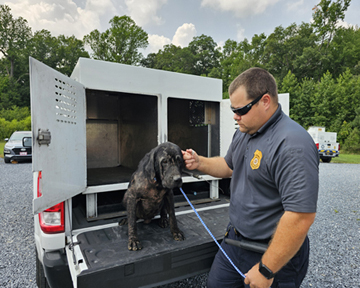
    On Aug.14, responding to an anonymous tip, DAS Animal Welfare Officers were dispatched to a home on Ida Lane in Bridgeville to check on the welfare of the dogs at a residence reported to be in poor condition. Upon arrival, officers found a dog lying unresponsive in the yard. The male dog was barely alive, extremely emaciated and missing most of its fur. The dog was rushed to a veterinarian, but his condition was so severe, he had to be euthanized.

    DAS executed a search warrant and found 19 additional dogs of varying breeds and ages inside and outside of the property, including a nursing Boston Terrier with six puppies, five alive and one deceased. An additional puppy did not survive. Many of the dogs had severe skin issues and suffered from sarcoptic mange, a highly contagious infection caused by burrowing mites. Some were malnourished and underweight. Some were in cramped housing with restricted movement.

    “All dogs suffered from varying levels of neglect,” said DAS Chief Mark Tobin. “It is completely inexcusable to treat animals this way, and it is against the law. This incident serves as an important reminder of the urgent need for responsible pet ownership and the importance of reporting any suspected animal cruelty. The anonymous tip we received proved to be crucial in enabling us to intervene and save the lives of these dogs.”

    All dogs were taken to Brandywine Valley SPCA where they are receiving medical treatment and care.

    “We’re grateful to the Office of Animal Welfare Delaware Animal Services Officers who rescued these dogs. No animal should be left to live like this, and our team has been working around the clock since these dogs came into our care,” said Brandywine Valley SPCA CEO Adam Lamb. “For some, the path to recovery and rehabilitation will be longer, requiring weeks of medical treatment, but our dedicated team of staff and volunteers continue to work with all of the dogs to provide the medical care and rehabilitation they need until they are healthy and ready to put this life of cruelty behind them.”

    Reporting Animal Cruelty

    If you are concerned about an animal’s welfare and suspect cruelty or neglect, contact OAW’s Delaware Animal Services immediately at 302-255-4646 or report online at animalservices.delaware.gov/report_violation/25.

    Animal Cruelty

    The Delaware Division of Public Health (DPH), a division of the Delaware Department of Health and Social Services, is a nationally accredited public health agency recognized by the Public Health Accreditation Board for its outstanding dedication to driving change through innovation.

    Anyone who is deaf, hard of hearing, Deaf-Blind or speech disabled can contact DPH by dialing 711 first using specialized devices (i.e. TTY, TeleBraille, voice devices). The 711 service is free and to learn more about how it works, please visit delawarerelay.com.

    Delaware Health and Social Services is committed to improving the quality of the lives of Delaware’s citizens by promoting health and well-being, fostering self-sufficiency, and protecting vulnerable populations.

    Health Equity Institute Of Delaware Offers Training To Clinical And Public Health Workers

    DOVER, DEL. (July 24, 2024)– The Delaware Division of Public Health (DPH) is now providing health equity training through the Health Equity Institute of Delaware (HEIDE). Led by the Office of the Medical Director and Office of the Chief Health Equity Officer, HEIDE helps providers and public health workers approach their work from a health equity perspective.

    “HEIDE adds a workforce training focus to Delaware’s current health equity landscape,” said DPH Deputy Director and Chief Health Equity Officer Tesha Quail, PhD, LPCMH, NCC. “We have created a learning community that creates a safe space for collaboration, dialogue, growth, and exploration around health equity.”

    Lieutenant Governor Bethany Hall-Long said, “Professional development through a real health equity lens is critical because that perspective will influence our patient care, our families, our community, and the development of healthcare policy and practice standards.”

    Participants will participate in online, virtual, and in-person educational experiences led by local and national health equity experts. There are two learner tracks: a clinician track for those in clinical and patient care fields, and a professionals’ track for those in non-clinical fields. College undergraduates and graduate students may also participate.

    Learners will identify equity gaps and work to fill them through short- and long-term projects. The projects will cover areas such as climate change, sexual and reproductive health, mental health services, and dental care. Learners will also be involved in research that will help inform state action and contribute to national discourse.

    “By working together with other stakeholders to promote health equity, participants in HEIDE will create an ecosystem that progressively supports vulnerable Delawareans to attain and maintain optimal health while moving the state towards equity, and addressing health disparities,” said DPH Medical Director Dr.Awele Maduka-Ezeh.

    HEIDE was launched on July 18 with virtual sessions led by various speakers. The initiative includes Working4Equity, a lecture series for working clinicians, held monthly by HEIDE and the Medical Society of Delaware. The Working4Equity lectures will be held virtually every third Thursday at 6:00 p.m. with continuing education credits offered by the MSD. The lectures may be helpful to scholars, practitioners involved in public health and health disparities work, and allies such as community members and for-profit businesses. The next lecture on Aug. 15 will feature DPH Chief Physician Olubusola Ogunlade, MD, FACOG.

    High school students can receive training through a four-week summer internship program, HEIDE-STEPS, that focuses on the social factors affecting health. Applications for the summer 2025 HEIDE-STEPS program will be accepted in January 2025.

    Applications are required to participate in HEIDE and are accepted on a rolling basis. Visit the HEIDE Application Form at https://tinyurl.com/yc22zxup to apply. For more information or for an application, call the DPH Office of the Medical Director and the Office of the Chief Health Equity Officer at 302-744-4700 or email HEIDE.DPH@delaware.gov after Aug. 1.

    HEIDE Training

    The Delaware Division of Public Health (DPH), a division of the Delaware Department of Health and Social Services, is a nationally accredited public health agency recognized by the Public Health Accreditation Board for its outstanding dedication to driving change through innovation.

    Anyone who is deaf, hard of hearing, Deaf-Blind or speech disabled can contact DPH by dialing 711 first using specialized devices (i.e. TTY, TeleBraille, voice devices). The 711 service is free and to learn more about how it works, please visit delawarerelay.com.

    Delaware Health and Social Services is committed to improving the quality of the lives of Delaware’s citizens by promoting health and well-being, fostering self-sufficiency, and protecting vulnerable populations.

    DPH Urges The Public To Attempt To Reunite Stray Pets

    DOVER, Del. (July 16, 2024)– The Delaware Division of Public Health (DPH) requests the cooperation of the public at this time to assist in making every effort to reunite stray dogs with their owners before contacting the Office of Animal Welfare’s (OAW) Delaware Animal Services for pickup or taking them to Brandywine Valley SPCA, the state’s contracted animal shelter. This urgent plea is a result of the recent strain on local animal shelters as a result of a Canine Infectious Respiratory Disease Complex outbreak. Recently, the Delaware Department of Agriculture issued an order prohibiting shelter and rescue dogs from moving in or out of the state due to the outbreak. The impact on local shelters from the outbreak is significant.

    “Stray dogs are usually found very close to home and by walking the dog around the neighborhood or checking with neighbors, the dog can often be reunited with their owner(s) with no need for impoundment,” said OAW Executive Director Christina Motoyoshi. “We ask that all finders post the dog on the State Lost and Found Pet Registry so the owner(s) may quickly find their pet. Additionally, posting the dog on the Nextdoor app and other forms of social media can be extremely effective. We thank the public for their assistance as we try to limit the number of impounded dogs and work to reunite every lost dog with their owner.”

    OAW and Delaware Animal Services (DAS) is committed to creating a safe community that celebrates the human-animal bond, where animals are free from abuse and neglect, every pet has a home, and animal caretakers have access to the tools and resources needed for their companions. Their mission is to make Delaware communities safer for animals and the public through the professional delivery of animal related services, innovative problem solving, and cooperative partnerships.

    The Delaware Division of Public Health (DPH), a division of the Delaware Department of Health and Social Services, is a nationally accredited public health agency recognized by the Public Health Accreditation Board for its outstanding dedication to driving change through innovation.

    Anyone who is deaf, hard of hearing, Deaf-Blind or speech disabled can contact DPH by dialing 711 first using specialized devices (i.e. TTY, TeleBraille, voice devices). The 711 service is free and to learn more about how it works, please visit delawarerelay.com.

    Delaware Health and Social Services is committed to improving the quality of the lives of Delaware’s citizens by promoting health and well-being, fostering self-sufficiency, and protecting vulnerable populations.

    Explore Delaware’s Public Health Data Portal During National Environmental Public Health Tracking Awareness Week (July 8 – 12, 2024)

    DOVER, DEL. (July 8, 2024)– The Delaware Division of Public Health (DPH) invites the public to explore My Healthy Community, a platform for Delaware’s environmental health data, during National Environmental Public Health Tracking Awareness Week. This annual observance, from July 8 to July 12, is dedicated to empowering communities to use heath data to make informed decisions on policy and community improvement. During this time, the Delaware Environmental Public Health Tracking Network (known as the DPH Tracking Program) will also join the Centers for Disease Control (CDC) to highlight important environmental health issues and showcase the various features of My Healthy Community.

    Working to build public health capacity and expertise in environmental health surveillance, the DPH Tracking Program helps empower people to make information-driven decisions that affect their health. My Healthy Community is a one-stop resource for individuals, communities, and organizations in Delaware to explore various datasets and view key findings pertaining to communities, county, and state. The program carefully curates this database to provide timely and accurate information on local conditions and its impacts on public health.

    My Healthy Community data can be viewed in dynamic maps, charts, and graphs and is downloadable. The platform allows users to explore past health data to gain valuable insights into their community’s health trends. By analyzing historical data, users can track changes in various diseases, risk factors, and health outcomes over time.

    My Healthy Community’s unique data include the following:

    During National Environmental Public Health Tracking Awareness Week, the CDC and partners such as DPH highlight important nationwide environmental health issues and showcase the work of the tracking programs. Governor John Carney and Lieutenant Governor Bethany Hall-Long proclaimed July 8-12, 2024, as Environmental Public Health Tracking Awareness Week in Delaware. It is the first time the observance has been recognized in Delaware, and 2024 will mark the ninth annual celebration for the CDC.

    “DPH applauds Governor Carney and Lieutenant Governor Hall-Long for declaring this week as Environmental Public Health Tracking Awareness Week in Delaware,” said DPH Director Steven Blessing. “This significant declaration underscores the importance of monitoring and understanding environmental health issues to ensure public wellbeing.”

    The theme for this year’s Tracking Awareness Week is “Be a Data Explorer!” Throughout the week, DPH will highlight five themes on social media:

    • Data discovery: Embrace the role of a data explorer by seeking environmental health data, which can help inform public health actions.
    • Tools of the trade: Utilize the essential My Healthy Community tracking tools to enhance your data exploration.
    • Adventures in teamwork: Discover how DPH works with partners to expand, improve and use environmental health data and resources.
    • Road to success: See success stories in action– how DPH uses these data to improve processes, policies, and communities.
    • Future directions: Plan a new data adventure by learning about DPH Tracking Program’s future advancements to My Healthy Community.

    For more information about My Healthy Community, visit https://myhealthycommunity.dhss.delaware.gov/home/. To learn more about National Environmental Tracking Awareness Week, go to https://www.cdc.gov/environmental-health-tracking/php/about/tracking-awareness-week.html#cdc_program_profile_next_step-get-involved. Connect with DPH on Facebook and Instagram for the latest My Healthy Community updates and more.

    PUBLIC HEALTH TRACKING AWARENESS WEEK

    The Delaware Division of Public Health (DPH), a division of the Delaware Department of Health and Social Services, is a nationally accredited public health agency recognized by the Public Health Accreditation Board for its outstanding dedication to driving change through innovation.

    Anyone who is deaf, hard of hearing, Deaf-Blind or speech disabled can contact DPH by dialing 711 first using specialized devices (i.e. TTY, TeleBraille, voice devices). The 711 service is free and to learn more about how it works, please visit delawarerelay.com.

    Delaware Health and Social Services is committed to improving the quality of the lives of Delaware’s citizens by promoting health and well-being, fostering self-sufficiency, and protecting vulnerable populations.

    DPH Releases 2024 Burden Of Chronic Disease Report

    DOVER, Del. (July 1, 2024)– The Delaware Division of Public Health’s (DPH) Physical Activity, Nutrition, and Obesity Prevention (PANO) Program released The Burden of Chronic Disease in Delaware 2024 report on June 28, 2024. The report summarizes the current state of chronic diseases and related risk factors in Delaware. It is an update to, and expansion of, Chronic Disease in Delaware: Facts and Figures, published in 2019 by DPH’s Health Promotion and Disease Prevention Section.

    The Burden of Chronic Disease in Delaware 2024 presents data and interpretation of those data for decision makers and other stakeholders about the current landscape of chronic disease in Delaware. The report compares Delaware and the United States in mortality, prevalence, and incidence of chronic conditions such as heart disease, stroke, vascular disease, cancer, chronic lower respiratory disease, and diabetes. It also shares data around related risk factors such as physical activity, nutrition, and obesity, tobacco and e-cigarette use, excessive alcohol use, and adolescent health. Important racial inequities related to chronic disease and related risk factors in Delaware are also highlighted throughout the report.

    “This report highlights the progress that Delaware has made in addressing chronic disease, while also emphasizing the work that still needs to be done,” said DPH Director Steven Blessing. “DPH is committed to addressing health inequities and enhancing our initiatives for chronic disease prevention and management.”

    According to the report, tens of thousands of Delawareans live with a chronic disease and 10% of residents have multiple chronic conditions. Chronic diseases account for seven of the top 10 leading causes of death in Delaware and cost Delaware billions of dollars each year in health-related expenses. Delaware has made some progress on reducing the impact of the leading chronic diseases over the last decade, with prevalence, incidence, and mortality decreasing for some conditions and increasing for others.

    Key Findings:

    • While the prevalence of specific heart diseases (coronary heart disease, angina, and heart attack) has been stable since 2011, the five-year age-adjusted mortality rate from heart disease (as a broader group) decreased in Delaware and nationally between 2006-2010 and 2016-2020.
    • The prevalence of stroke remained stable in Delaware and is about the same as the national median. In contrast, the five-year age-adjusted stroke mortality rate in Delaware increased from 2006-2010 to 2016-2020 and remains higher than the United States (U.S.) overall.
    • The five-year age-adjusted mortality rate from vascular disease remained stable from 2006-2010 and 2016-2020 in Delaware but decreased in the U.S. overall.
    • There have been no changes in the prevalence of hypertension from 2011 to 2021. Likewise, the five-year age-adjusted hypertension mortality rate remained stable between 2006-2010 and 2016-2020 in Delaware and the U.S. However, in 2016-2020, Delaware has a lower hypertension mortality rate compared to the U.S.
    • The mortality rate of chronic lower respiratory disease in Delaware is about the same as the U.S. overall but declined from 2006-2010 to 2016-2020.
    • The prevalence of diabetes among Delaware adults increased from 2011 to 2022. However, the five-year age-adjusted diabetes mortality rate is lower in Delaware than the U.S. Both trends remained stable between 2006-2010 and 2016-2020.
    • Non-Hispanic Black Delaware adults had higher prevalence of, and mortality from, diabetes than non-Hispanic White or Hispanic adults.

    The report informs statewide efforts to reduce the impacts of chronic disease in Delaware. It also includes recommendations for how Delaware can further chronic disease prevention and management efforts throughout the state to improve the health and well-being of residents statewide.

    To view the full report, visit https://dhss.delaware.gov/DPH/dpc/files/BurdenOfChronicDiseaseInDelaware2024Final.pdf

    Burden of Chronic Disease

    Anyone who is deaf, hard of hearing, Deaf-Blind or speech disabled can contact DPH by dialing 711 first using specialized devices (i.e. TTY, TeleBraille, voice devices). The 711 service is free and to learn more about how it works, please visit delawarerelay.com.

    DPH, a division of DHSS, urges Delawareans to make healthier choices with the 5-2-1 Almost None campaign: eat 5 or more fruits and vegetables each day, have no more than 2 hours of recreational screen time each day (includes TV, computer, gaming), get 1 or more hours of physical activity each day, and drink almost no sugary beverages.

    Delaware Health and Social Services is committed to improving the quality of the lives of Delaware’s citizens by promoting health and well-being, fostering self-sufficiency, and protecting vulnerable populations.