

Site Logo Delaware Health and Social Services

    DPH Cautions Public To Watch For Rabid Animals During Active Season

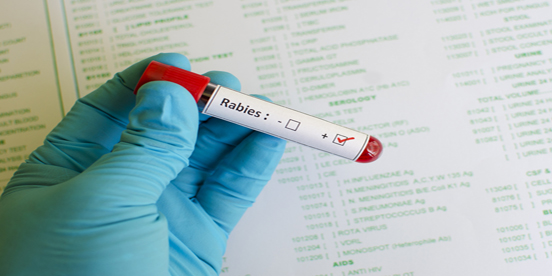
    DOVER, DEL. (June 26, 2024)– With the weather warming up, the Delaware Division of Public Health (DPH) urges the public to take precautions to avoid exposure to rabies and to be on the lookout for rabid animals during this active season.

    Rabies is endemic in Delaware, meaning it occurs regularly within the state’s wildlife populations. Since 2019, 54 animals have tested positive for rabies in Delaware. That number represents only a fraction of rabies in Delaware since, in most cases, DPH only tests animals that have potentially exposed humans to rabies.

    According to the U.S. Department of Agriculture (USDA), some of the visible signs of a rabid animal could include the animal being aggressive (e.g., attacking for no reason) or confused and/or drunk-like (e.g., walking in a circle).

    While any warm-blooded mammal is susceptible to rabies, the most common hosts of rabies in Delaware are community (stray or feral) cats, bats, raccoons, skunks, and foxes. Other local cases have also been seen in smaller numbers in cattle, equine, deer, groundhogs, and coyotes.

    Rabies is a fatal, yet preventable viral disease, and severe outcomes in humans can be avoided when treatment is administered soon after exposure before the disease develops. People usually get rabies from the bite of a rabid animal. It is also possible, but rare, for people to get rabies from non-bite exposures, including scratches, abrasions, or open wounds that are exposed to saliva or other potentially infectious material from a rabid animal.

    It is important to seek immediate medical attention and early treatment to prevent severe health outcomes. If you have been potentially exposed to an animal that seems likely to be infected with rabies, wash all wounds thoroughly with soap and water and seek medical attention immediately, even if the wound seems minor. All medical providers are required to report potential human exposure to the DPH Rabies Hotline by calling 302-744-4990 or by completing the human exposure report found at https://www.dhss.delaware.gov/DPH/dpc/rabies.html

    If You Encounter a Wild Animal Behaving Aggressively:

    • If you encounter a wild animal behaving aggressively, it is recommended that you contact the Department of Natural Resources and Environmental Control (DNREC)’s Wildlife Section at 302-739-9912. Calls after hours and on weekends can be made to the 24-hour dispatch number 800-523-3336. Staff will determine whether referring callers to a private nuisance wildlife control operator is more appropriate. A listing of nuisance wildlife control operators can be found at wildlifehelp.org.
    • If you encounter an aggressive stray domestic animal, such as a cat or dog, contact DPH’s Office of Animal Welfare (OAW) at 302-255-4646.

    If You Encounter a Sick or Injured Wild Animal:

    • To report a sick or hurt wild animal, Delaware residents are asked to contact the DNREC’s Wildlife Section at 302-739-9912 or 800-523-3336 after hours and on weekends. Staff will determine whether referring callers to a permitted volunteer wildlife rehabilitator is more appropriate.
    • If you encounter a sick stray domestic animal, such as a cat or dog, contact OAW at 302-255-4646.

    How to Protect Yourself and Your Family from Rabies:

    • Because animals can carry rabies without appearing sick, it is important to watch and enjoy wild and unknown animals from a distance.
    • Wear thick gloves if you are handling a community cat whose vaccination history is unknown.
    • Avoid hand-feeding wildlife.
    • Teach children not to touch any unfamiliar animal and seek adult assistance immediately if a child is bitten or scratched by any animal.
    • If a wild animal is on your property, keep your distance and let it wander away. Bring children and pets indoors and alert neighbors who might be outside. You may contact a nuisance wildlife control expert who will remove the animal for a fee. These professionals can be reached at wildlifehelp.org.
    • Feed pets indoors.
    • Tightly cap or put away garbage cans where animals cannot gain access to them.
    • “Batproofing” should be done during the fall and winter months. Nuisance wildlife control experts can provide these services for a fee.
    • Leave orphaned animals alone. Often, the parents are close by and will return for their young.
    • Because pets can get rabies from wildlife and could then spread it to humans, preventing rabies in pets is also an important step in protecting yourself and others.

    How to Protect Your Pets from Rabies:

    • Be sure your pet dogs, cats, and ferrets are properly immunized against rabies.
    • Keep family pets indoors at night. Never leave a pet outside unattended or let them roam free.
    • Consider vaccinating livestock and horses as well. Consult with your private veterinarian if you have questions about whether your animal(s) should be vaccinated against rabies.
    • If another animal injures your pet or presents with an unknown wound after being outdoors, contact your veterinarian for medical care. Your pet may need to be quarantined for a short time to ensure they were not exposed to a rabid animal.
    • For any questions regarding an animal quarantine, contact the Delaware Department of Agriculture (DDA) at 302-698-4630.

    For more information on the DPH Rabies Program, visit www.dhss.delaware.gov/DPH/dpc/rabies.html or call 1-888-285-5156 (24/7) or 302-744-4995 (business hours).

    For more information on rabies, visit the Centers for Disease Control and Prevention (CDC) at www.cdc.gov/rabies/,
    Rabies

    The Delaware Division of Public Health (DPH), a division of the Delaware Department of Health and Social Services, is a nationally accredited public health agency recognized by the Public Health Accreditation Board for its outstanding dedication to driving change through innovation.

    Anyone who is deaf, hard of hearing, Deaf-Blind or speech disabled can contact DPH by dialing 711 first using specialized devices (i.e. TTY, TeleBraille, voice devices). The 711 service is free and to learn more about how it works, please visit delawarerelay.com.

    Delaware Health and Social Services is committed to improving the quality of the lives of Delaware’s citizens by promoting health and well-being, fostering self-sufficiency, and protecting vulnerable populations.


    With Delaware Under Severe Heat Watch For The Weekend, DPH Offers Tips To Vulnerable Populations At Risk

    DOVER, DEL. (June 21, 2024)– With all of Delaware under a heat advisory or excessive heat watch alert from the National Weather Service, the Delaware Division of Public Health (DPH) offers information on resources and tips to help everyone stay safe this weekend and throughout the summer.

    While conditions such as those expected across the state in the next few days pose a risk for individuals of all ages and health status, certain populations are at greater risk for heat-related illnesses and heat impact. DPH offers the following information, education, and resources to assist Delawareans during the current heat wave and those expected to come this summer.

    Populations at greater risk of heat-related illnesses and heat impact:

    • Infants and children: One of our most vulnerable populations, infants and children, rely on others to care for them and address their needs. They are unable to fully communicate when they are overheated or thirsty/dehydrated and require additional attention during extreme heat.
    • Older adults: Those 65+ often cannot adjust to sudden temperature changes as well as younger individuals, and in some cases, this is due to their medications or current health conditions. Extra precautions should be taken and assistance from family members is even more important during extreme heat.
    • Pregnant individuals: Pregnancy can make you more likely to get sick from the heat because the body has to work harder to cool down both you and the baby. Additionally, hydration is especially important for pregnant individuals as you are more likely to become dehydrated more quickly.
    • Pets: Fully dependent on their human best friends for their care, pets are just as vulnerable to extreme heat. Animals at the greatest risk of stress from the heat include pregnant or lactating animals, very young and older animals, animals with darker coats, obese pets, short-nosed dog breeds and animals with chronic health conditions. It is best to bring pets indoors and provide plenty of water.

    Additionally, those who work outside, individuals with chronic health conditions, and anyone unable to obtain shelter in a cool, well-ventilated place are at greater risk of heat-related illnesses. If you know someone in any of these vulnerable populations, be sure to check on them frequently and offer assistance where possible.

    General tips to prevent heat-related illness:

    Stay as cool as possible.

    • Try to find an air-conditioned place, if possible, to help keep your body temperature at the right level. If you do not have an air-conditioned residence, locate a local cooling station or visit a public place such as a mall or library.
    • Wear the appropriate clothing. Choose lightweight, light-colored, loose-fitting clothing.
    • Use your stove or oven less to keep your home temperature down and avoid hot and heavy meals which add heat to your body.

    Avoid outdoor activities or plan accordingly.

    • If you have the option to avoid outdoor activity or limit it, do so.
    • If you must be outside for work or other activities, try to limit time outdoors to the coolest parts of the day. Pace yourself and protect your body from the sun by wearing a wide-brimmed hat, sunglasses, and sunscreen of SPF 30 or higher applied 30 minutes prior to going out and reapplied as appropriate.
    • Practice caution when walking dogs. If you must walk them, the best time of day in the summer months is in the early morning or late evening when the sun’s heat is not as intense. A simple touch of your hand to any surface where a walk is planned will tell if it’s too hot for a dog. If it’s too hot for a human hand, it’s too hot for a dog’s paws.

    Drink plenty of fluids

    • Stay hydrated with water and avoid sugary and alcoholic beverages.
    • Drink more than you typically would, regardless of how active you are, and do not wait until you are thirsty to drink.
    • Avoid drinking very cold liquids which could cause stomach cramps.
    • If your doctor limits how much fluids you drink or you are on medications where fluids are restricted, contact the doctor to determine what is best for you during extreme heat.

    Do not leave children, pets, or anyone else in a parked car.

    • Even if the windows are cracked, the temperature in a car can rise to a dangerous level very quickly.
    • When exiting a vehicle, double check the back seat to ensure that no sleeping child or pet is left behind.

    The CDC offers a heat and health tracker to determine the conditions for your specific area and the National Weather Service has a new website to identify the potential heat risk for your area over a seven-day period.

    The three Delaware county administrations, the City of Wilmington, and certain non-profits operate cooling stations during these heat advisories or alerts. For information on these locations and more heat-related resources, contact Delaware 211, which will have extended hours this Saturday, June 22 and Sunday, June 23 from 9:00 a.m. to 12:00 p.m. and is available weekdays from 8:00 a.m. to 9:00 p.m. You can also text your ZIP code to 898-211 to obtain more information.

    Severe Heat Tips

    Delaware Health and Social Services is committed to improving the quality of the lives of Delaware’s citizens by promoting health and well-being, fostering self-sufficiency, and protecting vulnerable populations.

    DPH Partners With Delta Sigma Theta Sorority To Provide Free Health Screenings, Cancer Prevention Education To Kent County

    DOVER, DEL. (June 20, 2024)– The Delaware Division of Public Health (DPH) Cancer Prevention and Control (CPC) Bureau and the Community Health Mobile Unit are partnering with the Dover Alumnae Chapter of Delta Sigma Theta Sorority (DST), Inc. to inform the community on all aspects of cancer prevention at the Positively Dover African American Festival on June 22, 2024. This event is sponsored by the Inner-City Cultural League, Inc. to celebrate and honor African American culture and heritage.

    The partnership aims to educate the public on cancer risk factors, screenings, treatment, and survivorship through culturally inclusive and equitable approaches to access and care on the four most common cancers worldwide: breast, colorectal, lung, and prostate cancer. DPH’s Community Mobile Health Unit will also be onsite to offer a variety of health screenings.

    “We are thrilled to collaborate with DST at the Positively Dover African American Festival,” said DPH Director Steven Blessing. “This partnership gives an opportunity to reach a diverse audience and provide them with valuable information and resources to improve their overall health. By offering free health screenings and education, we hope to empower individuals to take control of their health and make informed choices.”

    In Delaware, DPH has made considerable progress since 2001 to shrink the racial disparity in colorectal cancer. The Delaware Cancer Registry for 2016-2020 indicates non-Hispanic Black Delawareans have a slightly higher mortality rate for colorectal cancer compared to non-Hispanic White Delawareans (14.9 vs. 12.8 per 100,000 population). Although non-Hispanic White Delawareans have a higher mortality rate for lung cancer compared to non-Hispanic Black Delawareans (40.5 vs. 37.1 per 100,000 population), 48% of distant stage lung cancer cases were diagnosed in non-Hispanic Black Delawareans compared to 41% in non-Hispanic White Delawareans. Distant stage cancer cases are more severe, decrease survival, and are harder to treat compared to cases diagnosed in earlier stages.

    Non-Hispanic Black Delawareans are also more affected by breast and prostate cancers compared to non-Hispanic White Delawareans. According to the Delaware Cancer Registry for 2016-2020, non-Hispanic Black women have a higher mortality rate from breast cancer compared to non-Hispanic White women in Delaware (26.8 vs. 20.3 per 100,000 population). Similarly, non-Hispanic Black men die from prostate cancer at double the rate compared to non-Hispanic White men in Delaware (32.6 vs. 15.7 per 100,000 population). These trends in breast and prostate are not unique to Delaware and are consistent with national trend in cancer. For more information, visit https://dhss.delaware.gov/DPH/dpc/cancer.html.

    “The Dover Alumnae Chapter of Delta Sigma Theta Sorority, Inc. has a long-standing tradition of service and advocacy,” said DST President Wanda Davis. “Our partnership with the DPH allows us to expand our reach and effectiveness in promoting health and the overall well-being of Kent County community residents.”

    For more information on the Positively Dover African American Festival, visit their website at https://www.icclarts.org/aaf. To learn more about the Dover Alumnae Chapter of Delta Sigma Theta Sorority, Incorporated, visit their website at https://www.doverdeltas.org/. For more information on preventing, detecting, and treating cancer, visit https://www.healthydelaware.org/Individuals#cancer.

    DPH PARTNERS WITH DELTA SIGMA THETA

    The Delaware Division of Public Health (DPH), a division of the Delaware Department of Health and Social Services, is a nationally accredited public health agency recognized by the Public Health Accreditation Board for its outstanding dedication to driving change through innovation.

    Dover Alumnae Chapter of Delta Sigma Theta Sorority, Inc. (DST) is a Divine Nine member organization of the National Pan-Hellenic Council (NPHC) committed to service, scholarship, sisterhood and social action. With a rich history of community engagement and advocacy, the sorority strives to make a positive impact through various educational, cultural, and health-focused initiatives.

    Delaware Health and Social Services is committed to improving the quality of the lives of Delaware’s citizens by promoting health and well-being, fostering self-sufficiency, and protecting vulnerable populations.

    DPH Notifies Of Rise In Pertussis (Whooping Cough) Cases In New Castle County

    DOVER, DEL. (June 14, 2024)– The Delaware Division of Public Health (DPH) is currently investigating a rise in pertussis (whooping cough) cases in New Castle County. Pertussis is a serious respiratory illness that can lead to severe health complications including pneumonia, syncope (passing out), seizures, apnea (stopping breathing) and death, particularly in very young children. It begins with cold-like symptoms and develops into a bad cough. Coughing spells can be severe, and sometimes the individual might suffer from gagging or vomiting as a result. Some people also may have a high-pitched “whoop” after they cough, which is how the disease got its common name.

    The best way to prevent pertussis is through vaccination. The Centers for Disease Control and Prevention (CDC) recommends different vaccines against pertussis for different age groups.

    Children should receive 5 doses of the DTap vaccine administered at set intervals from age 2 months to 6 years to protect against pertussis. Adolescents and adults receive a dose of the adolescent/adult vaccine (Tdap). To protect their babies from pertussis, pregnant women should receive Tdap with each pregnancy. Both DTap and Tdap provide protection against pertussis, diphtheria and tetanus. For more information about pertussis vaccination visit the CDC’s website.

    If a Delaware resident is unsure of their vaccination status, they can visit the DelVAX public portal and view their personal profile. Individuals may also contact their primary health care provider for additional details or if they are unable to obtain their records on DelVAX.

    However, it is important to know that vaccinated individuals could get and transmit pertussis as the protection from the vaccine wanes over time. Symptoms in those who were previously vaccinated will appear to be milder than in someone who is unvaccinated. Individuals currently experiencing a prolonged cough or who have been in contact with someone with pertussis should contact their doctor for testing and/or treatment. The treatment for pertussis is with antibiotics. Antibiotics are also recommended for those exposed to a person with pertussis including all household contacts, close contacts, and contacts who have a high risk of developing severe pertussis. This is to prevent them from getting sick with pertussis.

    For more information about pertussis, visit https://www.cdc.gov/pertussis/.

    Pertussis

    The Delaware Division of Public Health (DPH), a division of the Delaware Department of Health and Social Services, is a nationally accredited public health agency recognized by the Public Health Accreditation Board for its outstanding dedication to driving change through innovation.

    Anyone who is deaf, hard of hearing, Deaf-Blind or speech disabled can contact DPH by dialing 711 first using specialized devices (i.e. TTY, TeleBraille, voice devices). The 711 service is free and to learn more about how it works, please visit delawarerelay.com.

    Delaware Health and Social Services is committed to improving the quality of the lives of Delaware’s citizens by promoting health and well-being, fostering self-sufficiency, and protecting vulnerable populations.

    DPH’S Physical Activity, Nutrition And Obesity Prevention Program Hosts Second Annual Advancing Healthy Lifestyles Conference

    DOVER, Del. (June 6, 2024)– The Delaware Division of Public Health’s (DPH) Physical Activity, Nutrition, and Obesity Prevention (PANO) Program hosted its second annual Advancing Healthy Lifestyles Conference today. At Delaware State University’s (DSU) Martin Luther King Jr. Conference Center, approximately 300 participants came together to learn, discuss, network, and share best practices and strategies to improve health equity statewide. With a shared mission of improving Delawareans’ health, well-being, and quality of life, participants explored a wide range of topics relating to the conference theme, Engaging Communities to Live Healthy Lifestyles.

    Throughout the day, participants were inspired by remarks from local dignitaries and healthy lifestyle advocates, including Lt. Governor Bethany Hall-Long, DPH Director Steven Blessing, DSU President Tony Allen, PhD, and keynote presenter and six-time Olympic champion Jackie Joyner-Kersee. In addition to plenary sessions, participants engaged in concurrent breakout sessions offering discussions on the topics of:

    • Community Engagement: Trust Begins Through Outreach
    • Behavioral Health: Improving Emotional Fitness and Wellness
    • Changing Mindsets: Shifting Attitudes for Positive Results.

    The Advancing Healthy Lifestyles Conference was originally created to build on Governor John Carney’s policy objectives for launching a statewide effort to reduce the impact of obesity and chronic disease, and to evaluate and implement the recommendations of the Delaware Cancer Consortium. The 2024 conference goals included:

    • Demonstrating best practices, opportunities, challenges, and success stories related to obesity and chronic disease prevention.
    • Discussing strategies to engage communities and encourage healthy lifestyles including building trust, changing mindsets, and motivating change.
    • Illustrating individual and systemic barriers to engaging in healthy lifestyles and sharing success stories to overcome these barriers.
    • Providing networking and collaboration opportunities for cross-sector, public health professionals.

    Statistics indicate that Delawareans need to improve their diet and exercise to maintain a healthy lifestyle. According to the Behavioral Risk Factor Surveillance System (BRFSS), obesity among Delaware adults rose from 33.9% in 2021 to 37.9% in 2022. In 2022, 71.8% of Delaware adults were obese or overweight. Among Delaware adults in 2022, 23.5% were not physically active, 20.5% did not consume vegetables, and 39.7% did not consume fruit. America’s Health Rankings 2023 Annual Report shows that 11.5% of Delawareans are food insecure and unable to provide adequate food for one or more household members due to lack of resources.

    “We were thrilled to see such a great mix of returning people and newcomers for the second year of our Advancing Healthy Lifestyles Conference,” said Delaware Department of Health and Social Services Cabinet Secretary Josette Manning. “Each person who participated today made a commitment to tackle the challenges of obesity, inadequate nutrition, lack of physical activity, and chronic disease. Together, we can drive change and ensure every Delawarean is on a path to a better quality of life for themselves and the generations that follow.”

    The day’s formal sessions concluded with the Overcomers Panel: Being Your Best Self that shared real-life journeys demonstrating the power of individuals who overcame hurdles and put healthier lifestyle practices into place to achieve a better quality of life. Panelist “DJHanDMan” Darrell McDonald, diagnosed with cerebral palsy at age 2, spoke about his advocacy for people with access and functional needs to move freely in the community and live their best lives.

    Conference participants had the opportunity to network and explore information tables offering additional resources to help them in their outreach throughout the year.

    Through the Advancing Healthy Lifestyles Coalition, PANO is advancing its mission by increasing awareness (the most pressing need related to health equity), focusing on mental health and wellness, and increasing community engagement. PANO sponsored and organized the 2024 Advancing Healthy Lifestyles Conference.

    The conference was co-sponsored by Delaware State University, Delaware Public Health Association’s Delaware Academy of Medicine, Delaware First Health, Alpha Kappa Alpha Sorority, Inc. Delaware chapters Zeta Omega, Epsilon Iota Omega, Sigma Zeta Omega, Alpha Alpha Mu Omega, and Alpha Alpha Tau Omega; Delaware Highmark Blue Cross Blue Shield, Bayhealth, ChristianaCare, the YMCA of Delaware, and AmeriHealth Caritas of Delaware.

    For more information on PANO’s Advancing Healthy Lifestyles initiative, visit HealthyDelaware.org/AdvancingHealthyLifestyles.

    AHL CONF

    Anyone who is deaf, hard of hearing, Deaf-Blind or speech disabled can contact DPH by dialing 711 first using specialized devices (i.e. TTY, TeleBraille, voice devices). The 711 service is free and to learn more about how it works, please visit delawarerelay.com.

    DPH, a division of DHSS, urges Delawareans to make healthier choices with the 5-2-1 Almost None campaign: eat 5 or more fruits and vegetables each day, have no more than 2 hours of recreational screen time each day (includes TV, computer, gaming), get 1 or more hours of physical activity each day, and drink almost no sugary beverages.

    Delaware Health and Social Services is committed to improving the quality of the lives of Delaware’s citizens by promoting health and well-being, fostering self-sufficiency, and protecting vulnerable populations.

    DPH Recognizes May As Lyme Disease Awareness Month

    DOVER, DE (May 9, 2024)– As warmer weather brings people outdoors and potentially in contact with ticks, the Delaware Division of Public Health (DPH) is recognizing Lyme Disease Awareness Month this May. According to DPH’s Office of Infectious Disease Epidemiology, Lyme disease is the most common tick-borne disease in Delaware, with over 300 cases reported each year.

    Lyme disease is spread by the bite of an infected blacklegged tick (also known as a deer tick). The tick must remain attached for 24 or more hours to spread the bacteria. In some cases, a rash resembling a bullseye will appear near the site of the bite. If an expanding rash with a diameter of more than two inches appears or flu-like symptoms occur over a 30-day period following a tick bite, individuals should contact their health care provider immediately.

    “Because ticks are found outdoors in most areas of Delaware, Lyme Disease Awareness Month is an opportunity for DPH to educate Delawareans about the importance of tick bite prevention,” said DPH Director Steven Blessing. “By taking simple precautions, individuals can protect themselves and their families while enjoying the outdoors.”

    If you find a tick on yourself or a friend or family member, make sure to use tweezers to grab the tick as close to the skin’s surface as possible and pull upward. Never use folklore remedies like “painting” the tick with nail polish or petroleum jelly or using heat to make the tick detach from the skin. Your goal is to remove the tick as quickly as possible.

    To avoid tick bites:

    • Avoid wooded or brushy areas with high grass and leaf litter.
    • Stick to the center of trails.
    • Treat clothing with products containing 0.5% permethrin or use Environmental Protection Agency (EPA)-registered insect repellents containing products like Diethyltoluamide (DEET). Always follow label instructions.
    • Perform tick checks on yourself, children, and pets after being outdoors.
    • Shower within two hours of coming indoors and tumble dry clothes in a dryer on high heat for 10 minutes to kill ticks.
    • Keep pets up to date on tick prevention products.

    To practice tick safety at home:

    • Create a “Tick-Safe Zone” through landscaping.
      • Place a three-foot-wide barrier of wood chips or gravel between lawns and wooded areas and around patios and play equipment.
      • Maintain a nine-foot-wide barrier between the wood chips and high-use areas.
    • Remove leaf litter and invasive plants such as multiflora rose, Japanese honeysuckle, Japanese barberry or Oriental bittersweet.
    • Keep grass short in high-use areas and keep leaves raked.
    • Keep your yard free of trash and debris. This discourages rodents, which ticks feed on.

    For more information about Lyme disease and tips for preventing tick-borne illnesses, visit the DPH Lyme disease webpage at https://www.dhss.delaware.gov/DPH/epi/lyme.html and Delaware’s Lyme Disease Education Oversight Board’s webpage at https://www.lymediseaseeducation.org/.

    Lyme Disease Month

    The Delaware Division of Public Health (DPH), a division of the Delaware Department of Health and Social Services, is a nationally accredited public health agency recognized by the Public Health Accreditation Board for its outstanding dedication to driving change through innovation.

    Anyone who is deaf, hard of hearing, Deaf-Blind or speech disabled can contact DPH by dialing 711 first using specialized devices (i.e. TTY, TeleBraille, voice devices). The 711 service is free and to learn more about how it works, please visit delawarerelay.com.

    Delaware Health and Social Services is committed to improving the quality of the lives of Delaware’s citizens by promoting health and well-being, fostering self-sufficiency, and protecting vulnerable populations.

    DPH Hosts Family Assistance Center Emergency Response Full-Scale Exercise

    DOVER, Del. (April 19, 2024)– The Delaware Division of Public Health (DPH) hosted a Family Assistance Center (FAC) Full-Scale Exercise on Thursday, April 18, in Frankford. The exercise simulated a traffic collision with multiple coach buses and numerous injuries and fatalities. It was held to test the readiness and response capabilities of state agencies and the community.

    DPH collaborated with the Delaware Emergency Management Agency, Delaware State Police, Delaware Division of Forensic Sciences, Division of Social Services, Victim Services and other emergency and community-based organizations to develop a comprehensive FAC plan. Participants acted out different scenarios that mimicked what might occur following the emergency.

    The Full-Scale Exercise aimed to evaluate the effectiveness of various response measures, including reunification information, patient/deceased tracking, implementation of a call center, communication strategies (including family and press briefings) and family support and victims’ services operations. It also tested various aspects of the response process, including the coordination between different agencies and local hospital systems, the flow of information to the public and the support provided to survivors and their families.

    “The exercise was an excellent opportunity for emergency responders and community stakeholders to practice and refine their emergency response plans,” said Delaware Department of Health and Social Services Secretary Josette Manning. “It also served as a valuable learning experience, providing them with insights into what steps can be taken in the event of a real emergency.”

    “DPH is committed to ensuring the safety and wellbeing of all Delawareans,” said DPH Director Steven Blessing. “By hosting this exercise, DPH aims to improve the coordination and effectiveness of emergency response efforts, ensuring that all Delawareans receive the support they need in times of crisis.”

    You can view the full recording of the exercise here.

    FAC

    Anyone who is deaf, hard of hearing, Deaf-Blind or speech disabled can contact DPH by dialing 711 first using specialized devices (i.e. TTY, TeleBraille, voice devices). The 711 service is free and to learn more about how it works, please visit delawarerelay.com.

    DPH, a division of DHSS, urges Delawareans to make healthier choices with the 5-2-1 Almost None campaign: eat 5 or more fruits and vegetables each day, have no more than 2 hours of recreational screen time each day (includes TV, computer, gaming), get 1 or more hours of physical activity each day, and drink almost no sugary beverages.

    Delaware Health and Social Services is committed to improving the quality of the lives of Delaware’s citizens by promoting health and well-being, fostering self-sufficiency, and protecting vulnerable populations.
    DPH Observes World Tuberculosis (Tb) Day On March 24

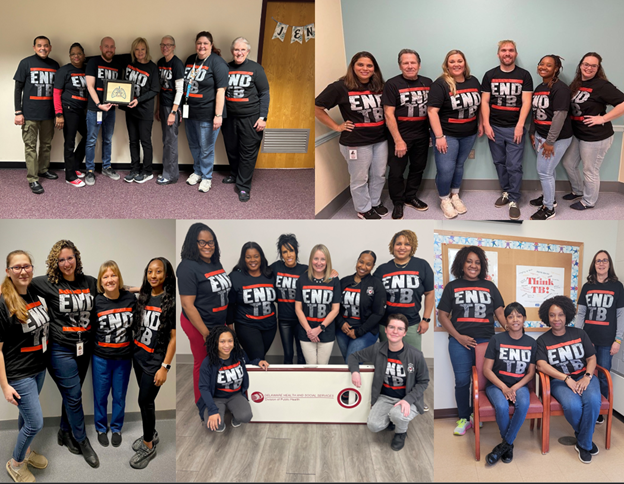
    DOVER, DE (Mar. 21, 2024)– The Delaware Division of Public Health (DPH) will join health organizations and advocates around the globe to recognize World Tuberculosis (TB) Day on Sunday, March 24. This day commemorates Dr. Robert Koch’s groundbreaking discovery of Mycobacterium tuberculosis and is used to raise awareness and increase education about the threat of TB.

    DPH’s Tuberculosis Elimination and Control Branch (TECB) extends its deepest appreciation to the health care community and TB clinics across Delaware for their unwavering dedication to combating TB in our state and collectively working to provide the best services available to our communities.

    “TB is a preventable and curable disease, but it remains a major public health challenge,” said TECB Program Manager Tara Jenkins. “In 2022 alone, an estimated 1.3 million people worldwide died from TB, largely due to inadequate access to testing and treatment. It is important that we prioritize our efforts in detecting and fully treating TB cases, as well as implementing preventive measures such as good infection control practices when a case is identified and early treatment of asymptomatic TB infection to prevent progression to full TB disease.”

    The Office of Infectious Disease Epidemiology (OIDE) is ready to assist with information pertaining to TB infection (TBI) or TB disease. OIDE can facilitate access to DPH TB clinics, with one located in each county. These clinics offer comprehensive care for both TBI and TB disease, including screening, diagnosis and treatment services, often at minimal to no cost.

    Identifying suspected and confirmed cases of TB disease swiftly is pivotal in stopping its spread. Additionally, connecting individuals with TBI, also referred to as latent tuberculosis infection (LTBI), to appropriate treatment is paramount in preventing the progression of TB disease. Without intervention, approximately one in 10 individuals with latent TB infection will develop active TB disease in the future. DPH is committed to ensuring strong collaboration between healthcare providers and all public health authorities in the continued pursuit of eliminating TB.

    “DPH remains committed to its ongoing efforts to combat TB,” said DPH Medical Director Dr. Awele Maduka-Ezeh. “Together, we can make a difference in the lives of those affected by TB and create a healthier and safer future for all.”

    To learn more, visit https://dhss.delaware.gov/DPH/dpc/tbelimination.html.

    TB Day

    The Delaware Division of Public Health (DPH), a division of the Delaware Department of Health and Social Services, is a nationally accredited public health agency recognized by the Public Health Accreditation Board for its outstanding dedication to driving change through innovation.

    Anyone who is deaf, hard of hearing, Deaf-Blind or speech disabled can contact DPH by dialing 711 first using specialized devices (i.e. TTY, TeleBraille, voice devices). The 711 service is free and to learn more about how it works, please visit delawarerelay.com.

    Delaware Health and Social Services is committed to improving the quality of the lives of Delaware’s citizens by promoting health and well-being, fostering self-sufficiency, and protecting vulnerable populations.

    Dhss And Dhcc Launch Benchmark Trend Report Dashboard

    NEW CASTLE (February 12, 2024)– The Delaware Department of Health and Social Services and the Delaware Health Care Commission have launched the Benchmark Trend Report Dashboard to further support the State’s efforts to improve health care quality for all residents, while simultaneously working to monitor and reduce the economic burden of health care spending.

    This dashboard allows an interactive view of Delaware’s health care spending and quality data comparing across multiple years. Users can directly interact with the data and visualizations, allowing a customizable journey through the dashboard. Information is broken down by state-, market- and insurer -level spending as well as type of insurance and total healthcare enrollment.

    The spending and quality benchmarks were originally developed to support Governor John Carney’s vision for the State. In November 2018, Governor Carney signed Executive Order 25, establishing a state health care spending benchmark, an annual per-capita-rate-of-growth benchmark for health care spending, and multiple health care quality measures that are to be evaluated and adjusted every three years. The benchmarks were subsequently codified in August of 2022 through House Bill 442.

    “Our goal of ensuring that Delawareans can access and afford quality health care is only possible when agencies across the State work collectively to pursue answers and solutions,” said DHSS Cabinet Secretary Josette Manning. “The benchmarks are a means to continue the conversation about how to decrease the cost of care and improve quality for the individuals we serve.”

    To learn more about Delaware’s health care spending and quality benchmarks, visit the Delaware Health Care Commission website at https://dhss.delaware.gov/DHCC/.

    Delaware Health and Social Services is committed to improving the quality of the lives of Delaware’s citizens by promoting health and well-being, fostering self-sufficiency, and protecting vulnerable populations.

    Delaware Division Of Substance Abuse And Mental Health Announces Presentation Of Gold Award To High 5 Hospitality

    MILFORD (January 30, 2024)– The Delaware Division of Substance Abuse and Mental Health (DSAMH) presented the Gold Restaurant Accolade Program Award to High 5 Hospitality today at its new Buffalo Wild Wings restaurant in Milford.

    The Restaurant Accolade Program has successfully trained 124 restaurants to recognize and respond to an overdose, making these restaurants Bronze level awardees. Thirty-three restaurants have identified staff members who are willing to link staff to local treatment and harm reduction resources in Delaware, making them Silver level awardees. High 5 Hospitality is the first restaurant group to achieve the Gold level award by putting into place policies and procedures to support staff who struggle with substance use, training staff to recognize and respond to an overdose, and providing local resources to those who may need them.

    “We are proud of our leaders and team members for being the first hospitality group to achieve the Gold level status,” said Lori Ewald, High 5 Hospitality Director of Human Resources and Marketing. “This training has helped our team members gain an increased awareness of the opioid crisis and provided them with tools to save a life. When people ask why we participate in this program, my response is simple– Why wouldn’t we?”

    Restaurants are one of the industries whose workforce has historically had a high incidence of overdose. In Delaware, 549 restaurant staff members have been trained to recognize and respond to an opioid overdose. Staff and restaurants were given Narcan kits to use and keep on site.

    “We congratulate High 5 Hospitality on being the first group to reach our Gold status,” said Frances Marti, DSAMH Deputy Director. “It is vital to meet individuals in the communities and spaces where they live, work, and play and we appreciate all the restaurants that have partnered with us in this program. This program is very important to providing support to restaurants and their patrons and staff in our fight to combat overdoses and addiction”.

    Restaurants can schedule training and get more information by contacting Anne.Carr@delaware.gov.

    If you or a loved one is struggling with addiction in Delaware, call the DHSS 24/7 Crisis Hotline to be connected to treatment and recovery options. In New Castle County, call 1-800-652-2929. Or in Kent and Sussex counties, call 1-800-345-6785.

    For free 24/7 counseling, coaching, and support, as well as links to mental health, addiction, and crisis services call the Delaware Hope Line at 1-833-9-HOPEDE. To search for treatment and recovery services in Delaware or nearby states, visit HelpIsHereDE.com.

    Delaware Health and Social Services is committed to improving the quality of the lives of Delaware’s citizens by promoting health and well-being, fostering self-sufficiency, and protecting vulnerable populations.